Briefly about Soviet knives.
Briefly about Russian knives.
Vendor
-
Dżamm Knives
(5)
-
Grad Gorkiy
(1)
-
IP Siomina
(112)
-
Khan Cutlery
(4)
-
Khazni Khan Forge
(1)
-
Kyson
(2)
-
Martinez Albainox
(9)
-
Maruszyny brothers forge
(28)
-
MB Masters
(10)
-
Okskiye Nozhi
(28)
-
Otabek Sulayev
(1)
-
Uldanov Workshop
(1)
-
Uzbek blade master
(2)
-
Vladimir Kirillov workshop
(1)
-
Zhbanov forge
(54)
-
Zlatoust
(69)
Price
-
from
to
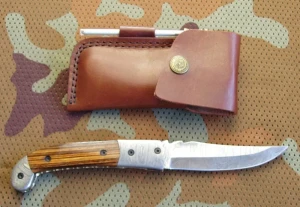
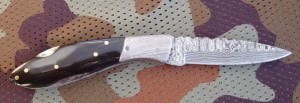
Damasus steel is a forged steel characterized by distinctive patterns visible on the surface. It was superplastic and very hard at the same time, its quality has given rise to many legends. The original method of producing it is not known.
Amigo (gilded pattern welded damascus, leather handle, duralumin castings)
€240.00
Ataman (gilded pattern welded damascus, leather handle, duralumin castings)
€412.50
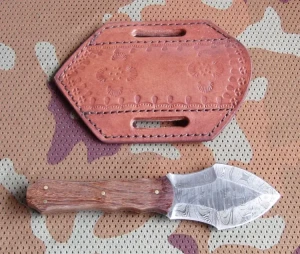
Knives made of the material known as "Damascus steel" hold a special place among the products of Russian manufacturers. It must be noted that the production process of Damascus steel was shrouded in mystery and was never mastered in Europe. No reliable descriptions of this process have survived to modern times. Consequently, what is referred to as "Damascus steel" today is the result of efforts to reproduce a material that as closely as possible matches the characteristics of surviving samples. The greatest progress in this field has been achieved by teams of metallurgists in the USA and Russia. It is precisely in these countries that the so-called "Damascus steel" is currently widely used for the production of high-end knives. These products are easily recognizable due to a structure that is distinctly different from similar materials. The presence of regular iron carbide domains in Damascus steel forms a network of layers and ribbons running parallel to each other. This creates a characteristic pattern on the surface of blades made from Damascus steel, which becomes visible to the naked eye after treating the blade with acid.