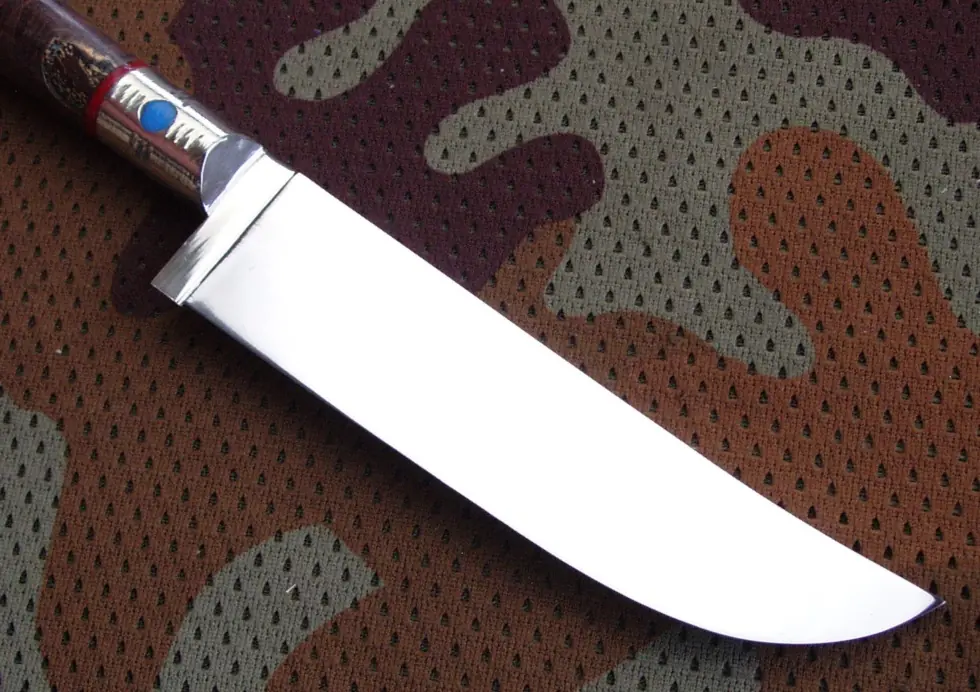
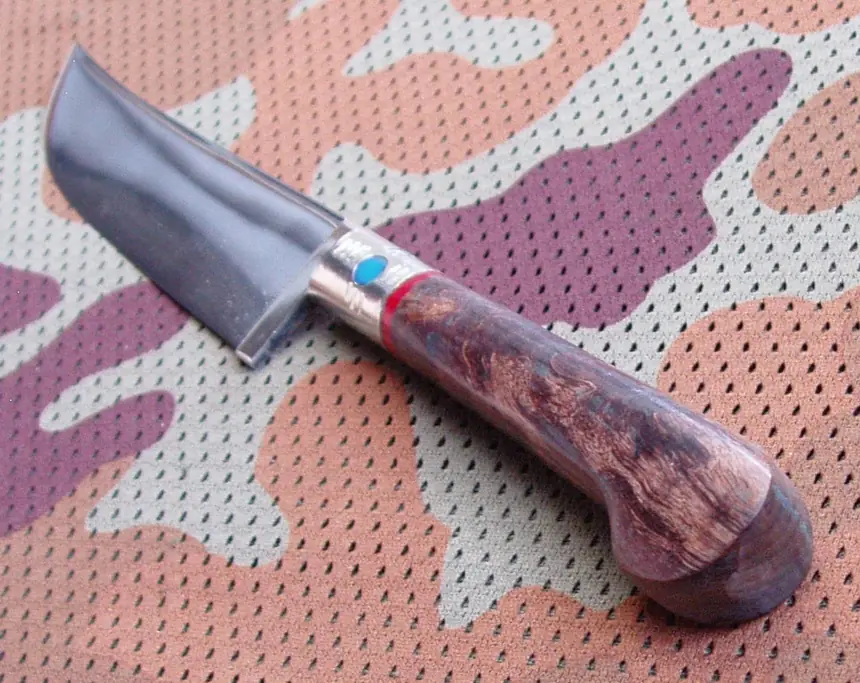
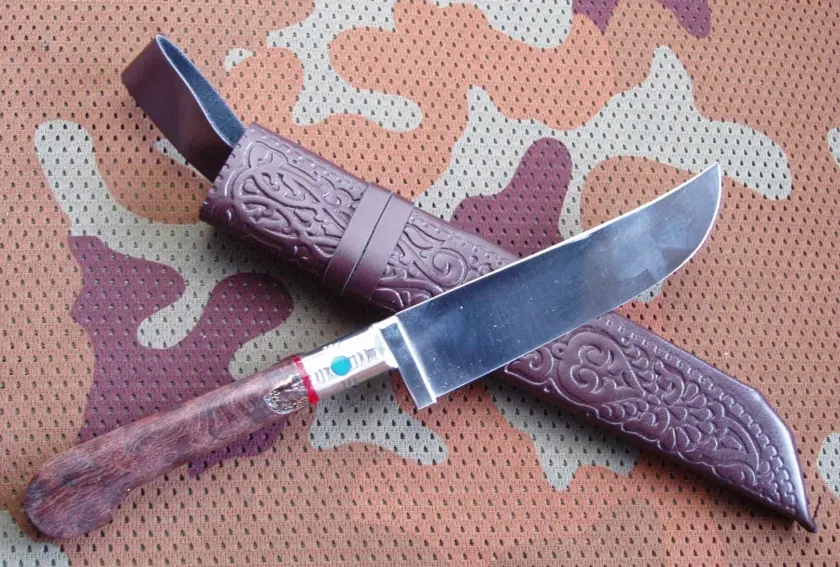
Pchak (from the Uzbek word Pichoq – knife) is a traditional knife of the Uzbeks and Uyghurs, widespread with slight variations in detail throughout Central Asia. Pchaks traditionally feature a single-edged blade with a full flat grind, set into a (mostly) narrow handle with a round cross-section. A narrow tang extends from the blade at the spine level. These are utility knives meant for kitchen work, although among the Uyghurs, the pchak was a male attribute, so it must have also been used as a weapon. Pchaks were made from various materials; for the wealthy, they could feature high-quality steel with lavishly decorated elements, though such pieces were rare. Wootz and Damascus steel were mostly reserved for sabers, while mass-produced pchaks were made from carbon steels of lower hardness. Today, 90% of the Uzbek pchaks available in Russia are manufactured from widely accessible industrial tool steel ШХ15 (Polish analogue LH15) hardened within the range of 40-45 HRC. ШХ15 is used for manufacturing rings, rolling bearings, and other components operating in non-corrosive conditions that require high hardness and wear resistance. It is an excellent material for knife manufacturing, with the caveat that it is not corrosion-resistant – the knife must be wiped dry after use. If the steel used is stainless, it will almost certainly be 40x13. In either variant, pchaks offer excellent cutting performance.
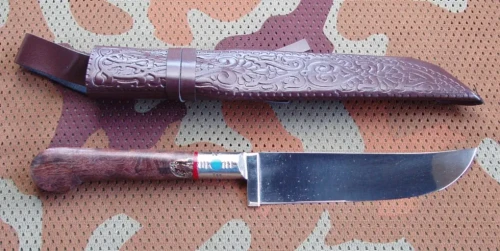
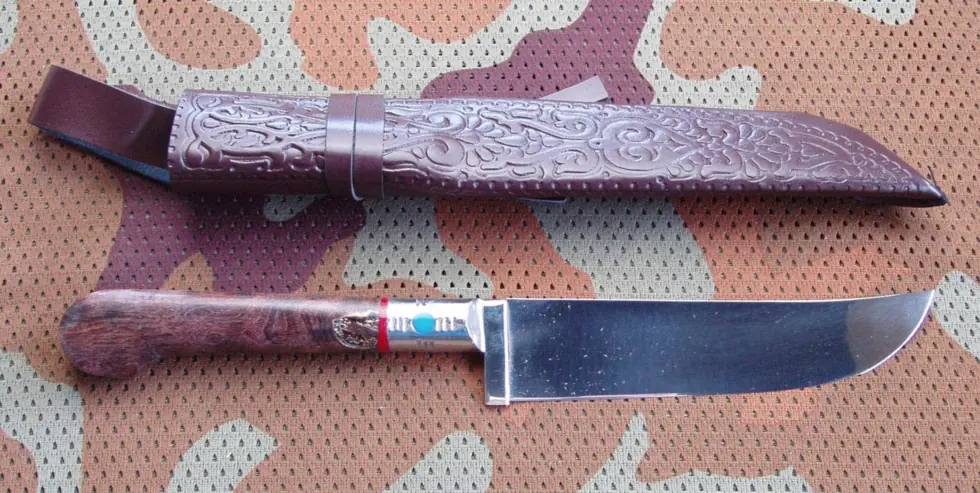
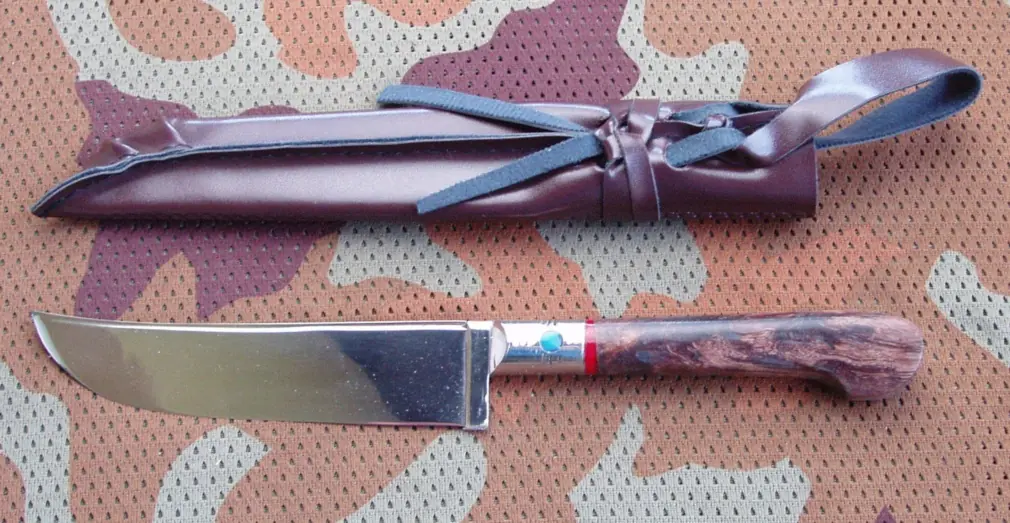
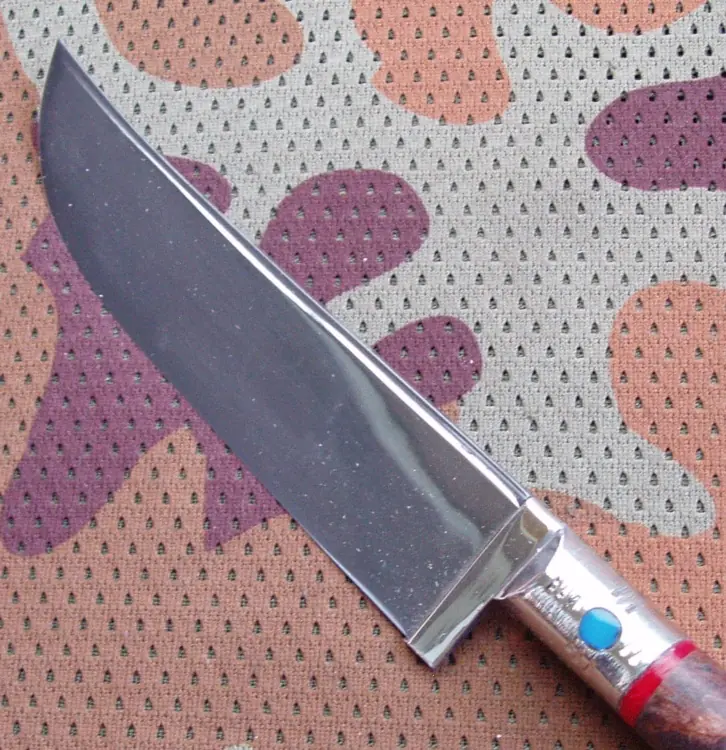
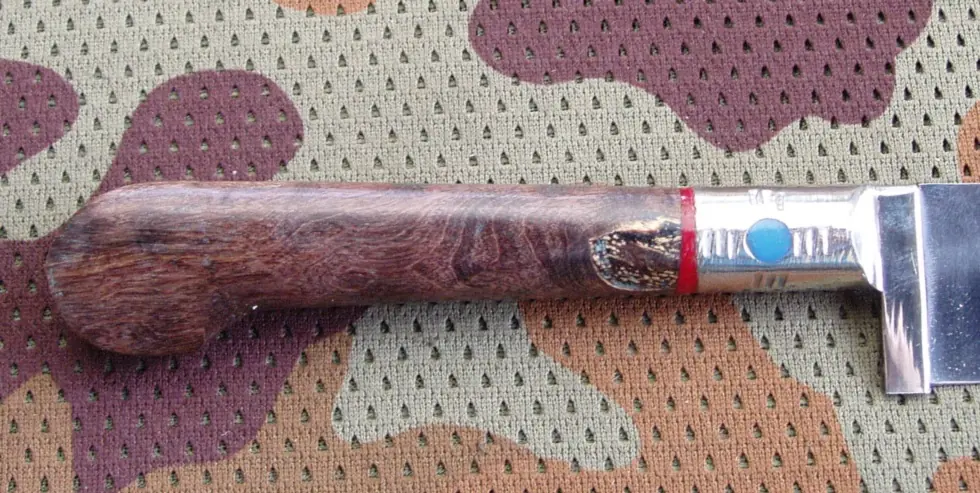
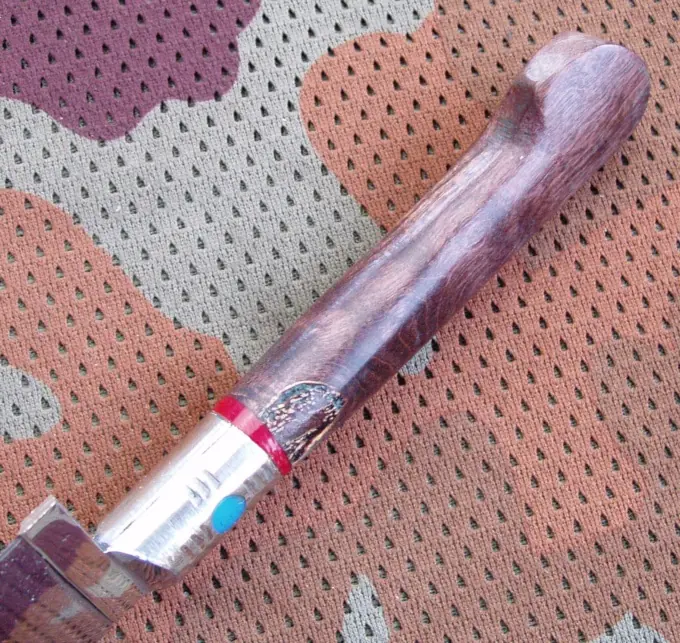
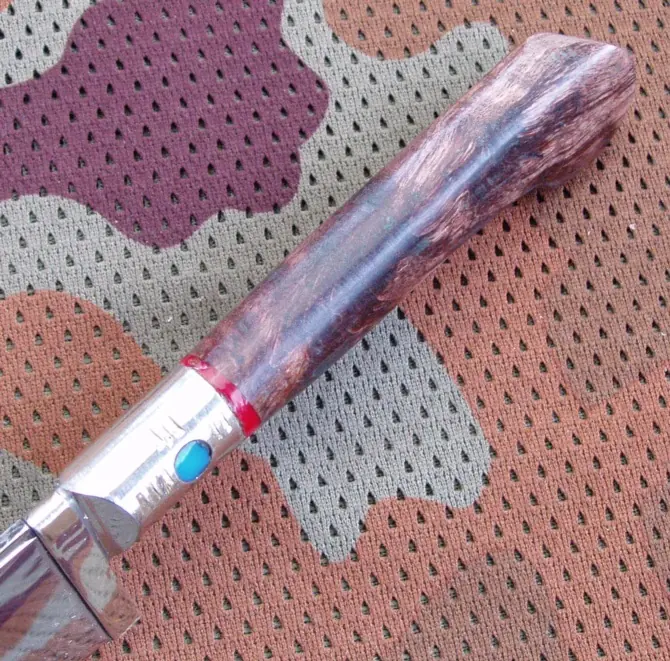
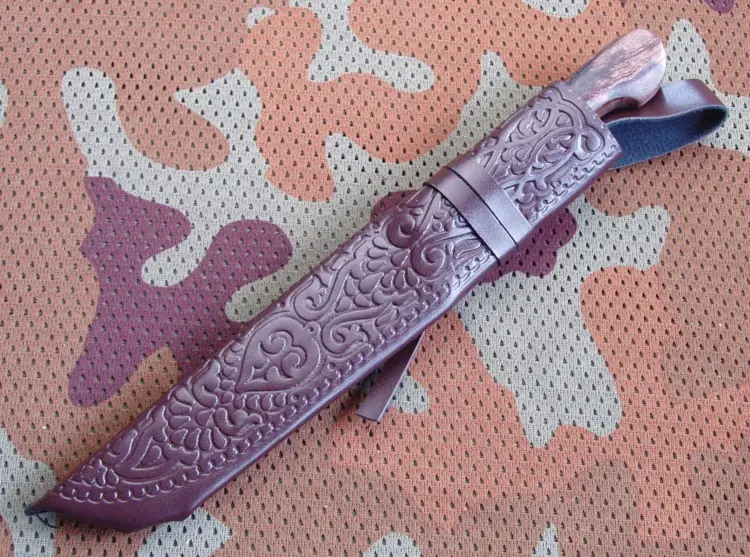
This particular stainless steel pchak belongs to the Kayke type, where the tip of the knife is raised above the spine line. It is worth emphasizing that the vast majority of Uzbek stainless steel pchaks are forged. In Russia, even when speaking of handcrafted knives, only harder stainless steels like 95x18 or H12MF are forged. Uzbek craftsmen source the material for their knives from scrap parts such as engine valves, tools, etc., which means it must be forged down. Sukma-type handle (meaning push-tang construction) made of stabilized birch. A rather simple but typical for pchaks bolster made of melchior. The sheath, featuring a form traditional to knives from this region, is made of thin leather decorated with an embossed ornament.
Overall length: 223 mm
Blade length: 111 mm
Blade width (max.): 26 mm
Blade thickness (max.): 2 mm
Steel (according to Russian nomenclature): 40x13

 Briefly about pchaks (or pichaks, or pichoqs)