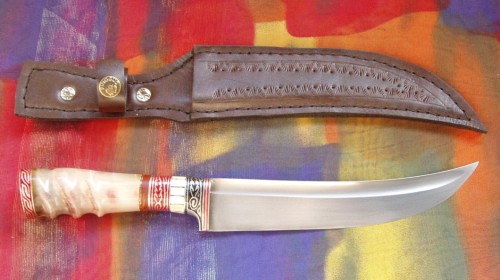
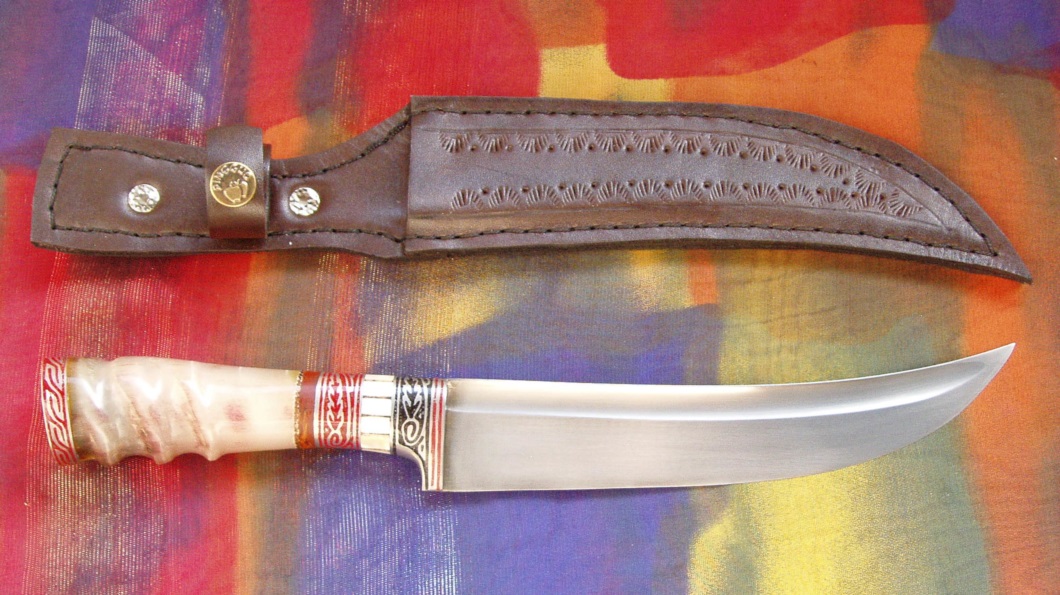
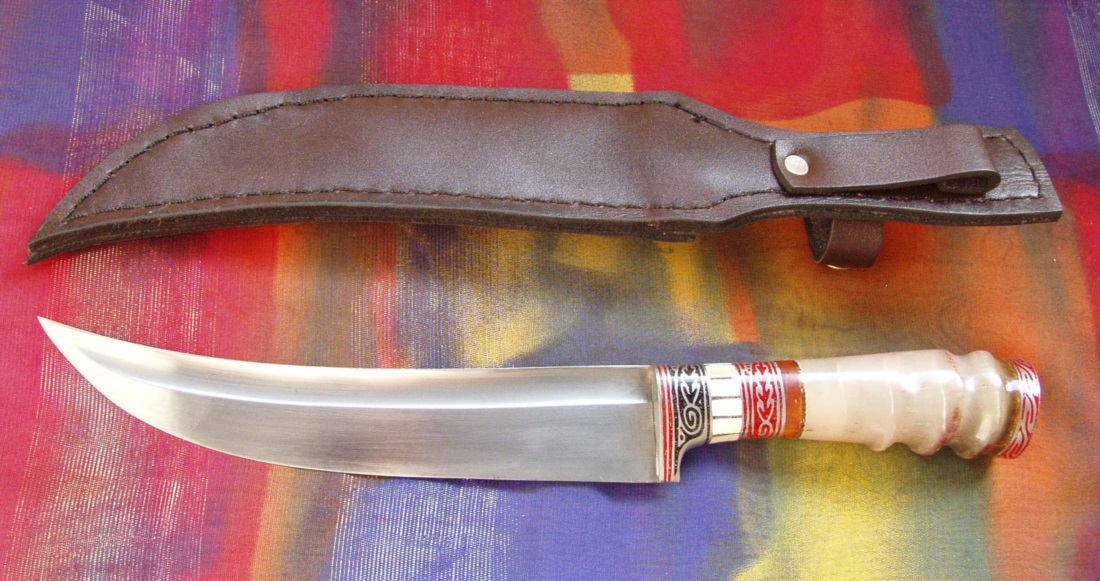
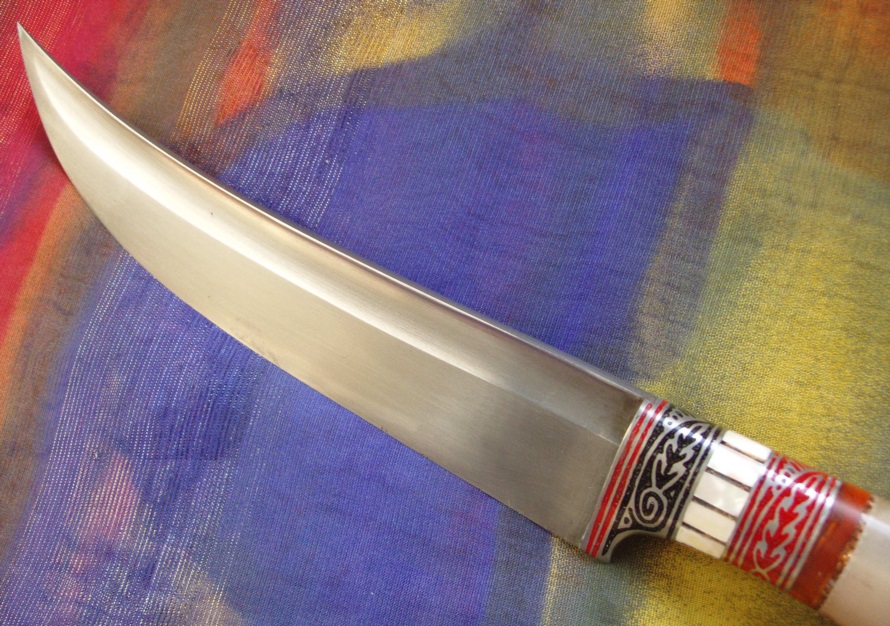
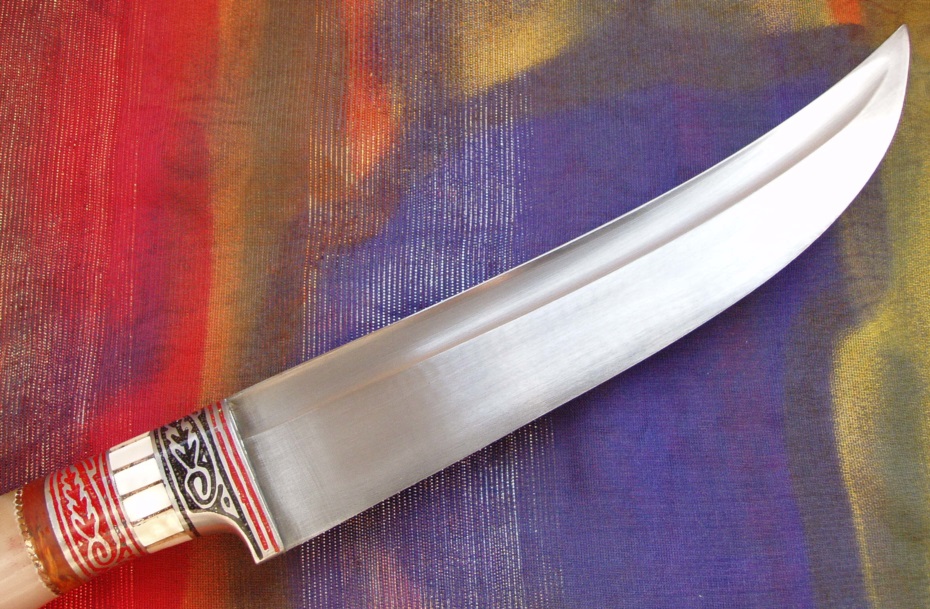
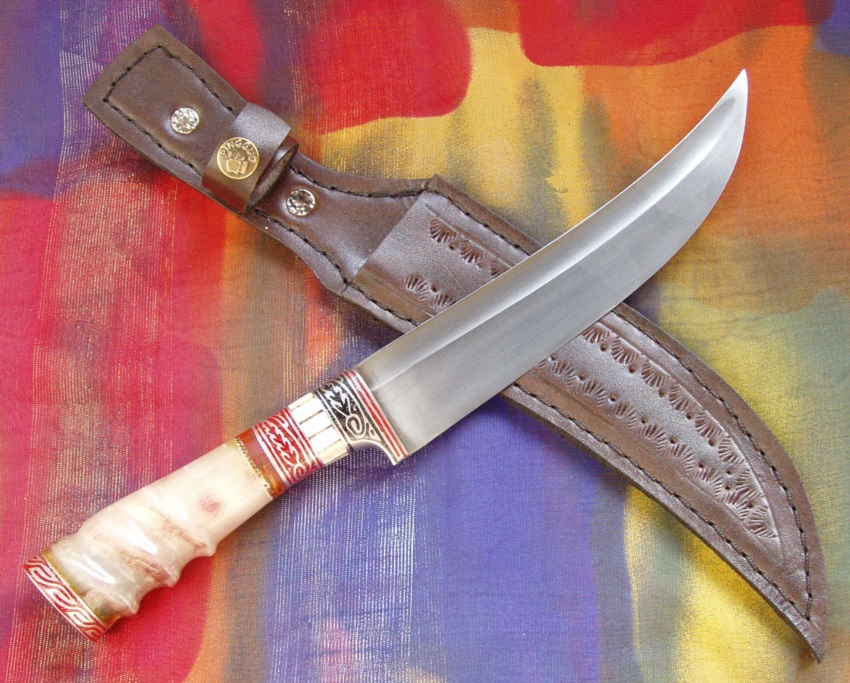
A large and heavy pchak with a handle crafted from steppe saiga horn. The pchak (derived from the Uzbek word pichoq, meaning knife) is a traditional knife of the Uzbek and Uyghur peoples, found with minor regional variations throughout Central Asia. Traditionally, pchaks feature a single-edged blade with a full flat grind, fitted into a narrow handle with a circular cross-section. The narrow tang projects from the blade aligned with the spine. These are utilitarian knives used primarily for culinary tasks, although among the Uyghurs, the pchak served as a symbol of manhood and was therefore likely used as a weapon too. Pchaks were produced from a variety of materials. High-quality steels with ornate decorations were reserved for the wealthy, though such pieces were rare. Bulat and Damascus steels were typically reserved for sabers, whereas mass-produced pchaks were made from low-hardness carbon steels. Today, 90% of the Uzbek pchaks available on the Russian market are manufactured from ShX15 industrial tool steel (equivalent to the Polish LH15). ShX15 is utilized for producing rings, rolling bearings, and other components requiring high hardness and wear resistance in non-corrosive environments. It serves as an excellent material for knives, with the caveat that it is prone to corrosion – the blade must be wiped dry after each use. Pchaks deliver exceptional cutting performance.
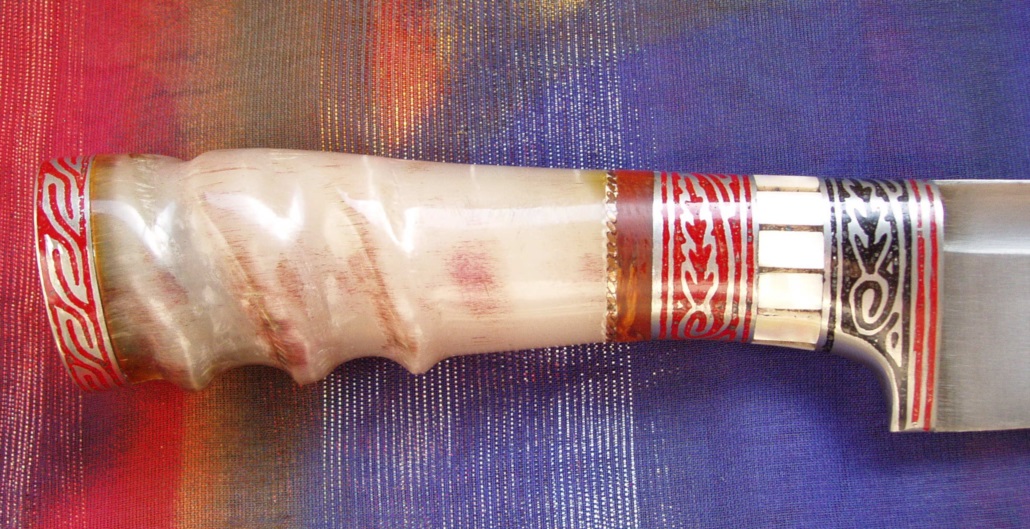
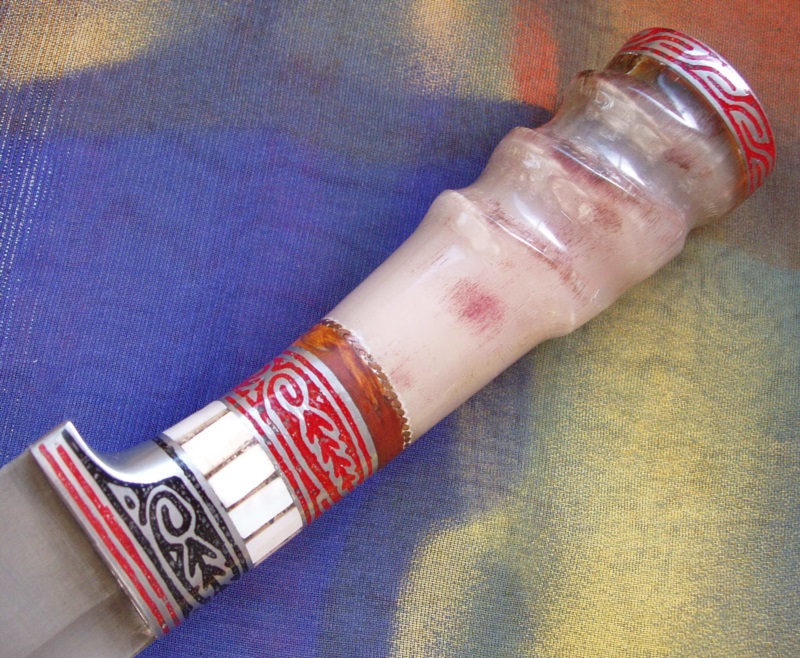
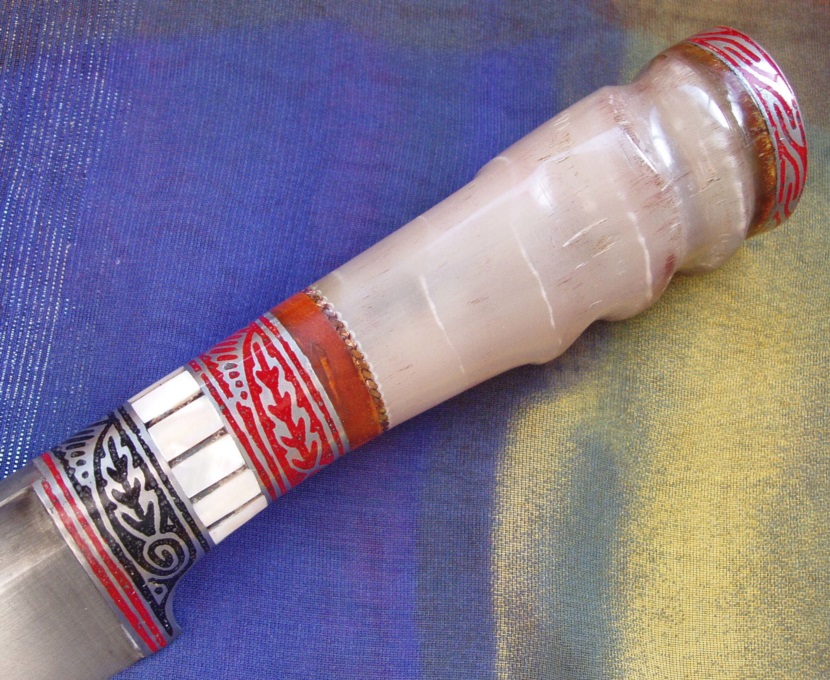
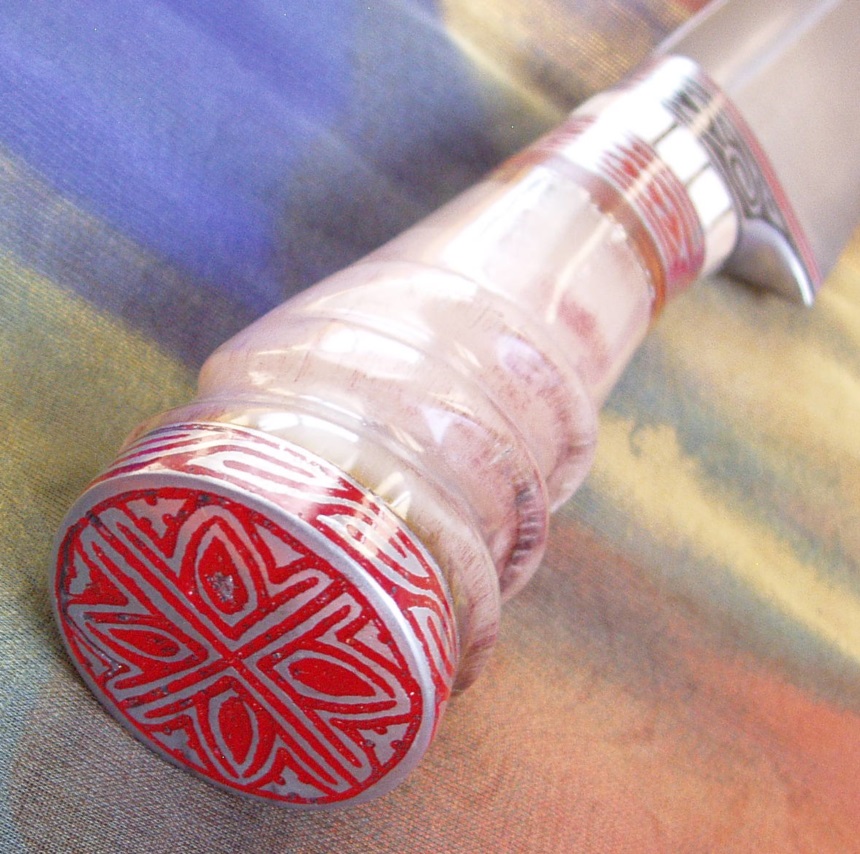
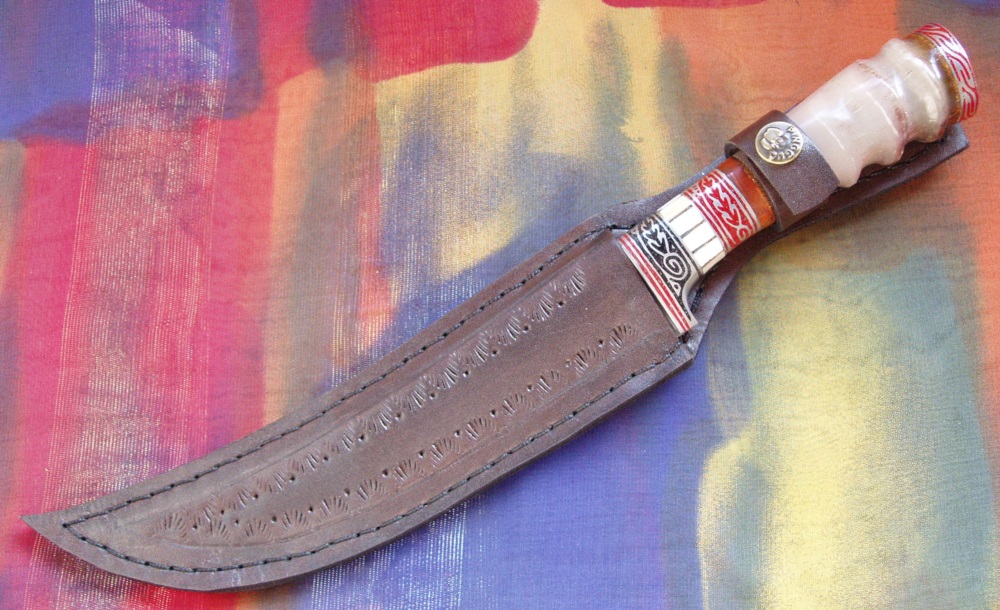
This specific pchak belongs to the Kayke type, characterized by a trailing point where the tip rises above the spine line. It is distinguished by its dimensions and weight: the blade measures 188 mm in length and 6 mm in thickness at the spine. The bolster, functioning as a half-guard, is adorned with mother-of-pearl and a black-and-red ornamental pattern. A matching red ornament decorates the pommel at the end of the handle. The handle itself is crafted from the horn of the steppe saiga, an antelope species native to the arid steppes and semi-deserts of Central Asia. It includes a robust sheath made of thick leather, which is more characteristic of Russian knives, as traditional pchaks generally feature sheaths made of thinner leather.
Total length: 315 mm
Blade length: 187 mm
Blade width (max.): 37 mm
Blade thickness (max.): 6 mm
Steel (according to Russian nomenclature): ШX15

 Briefly about pchaks (or pichaks, or pichoqs)