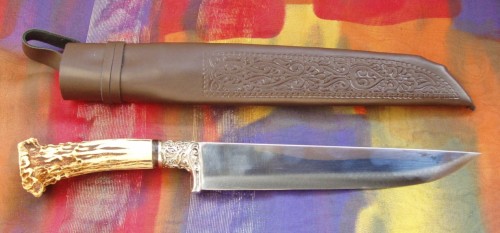
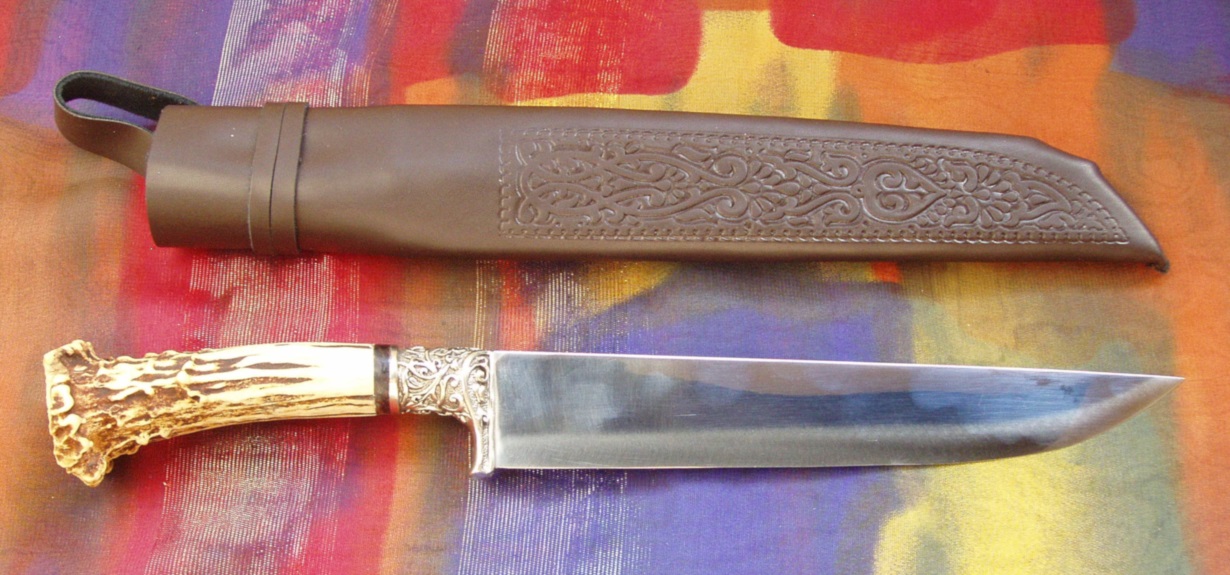
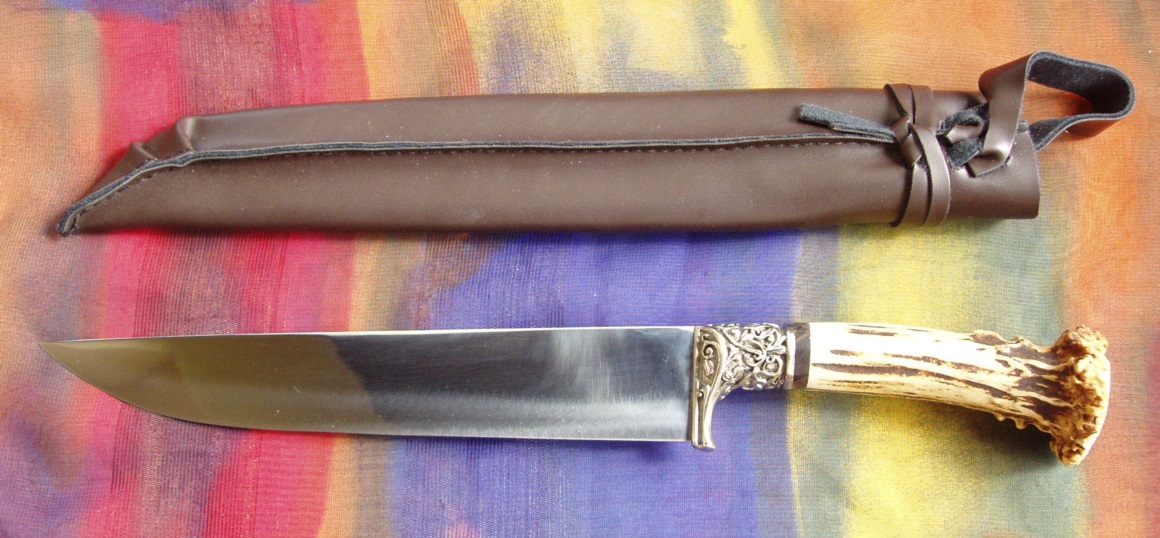
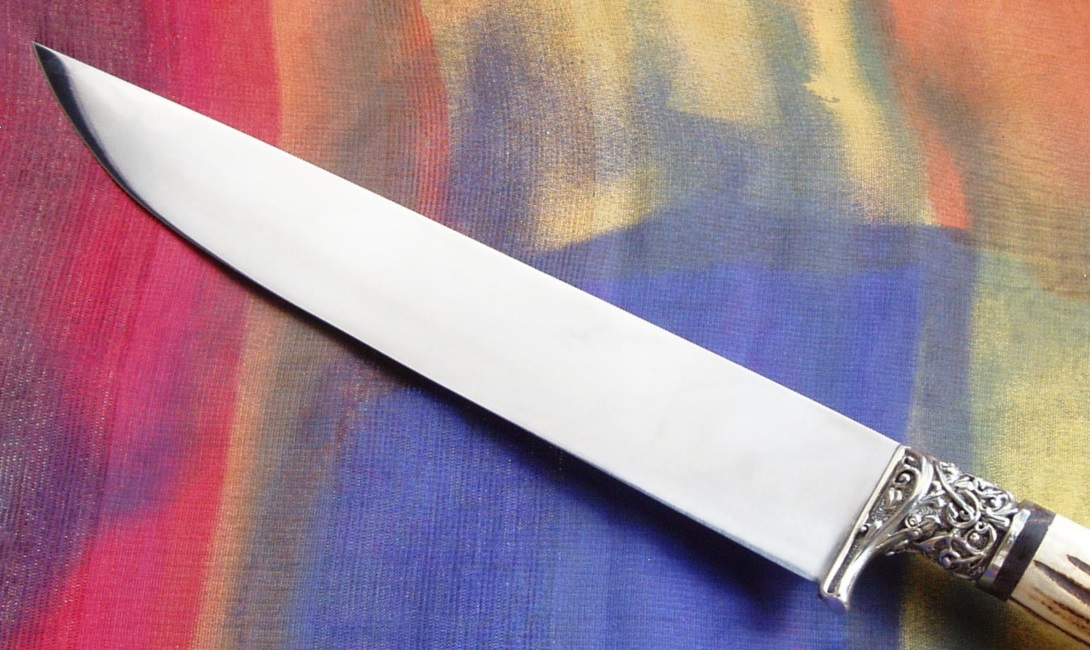
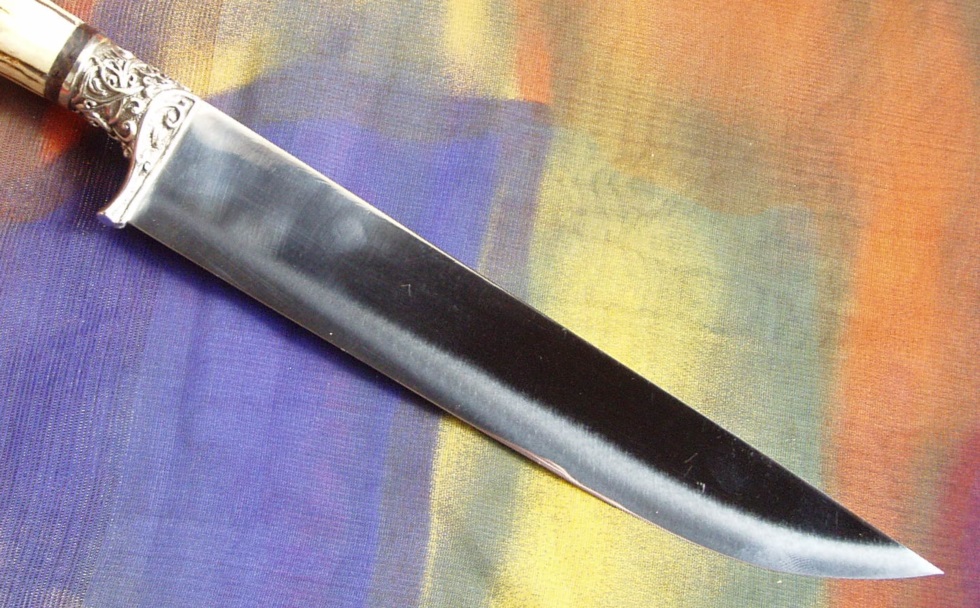
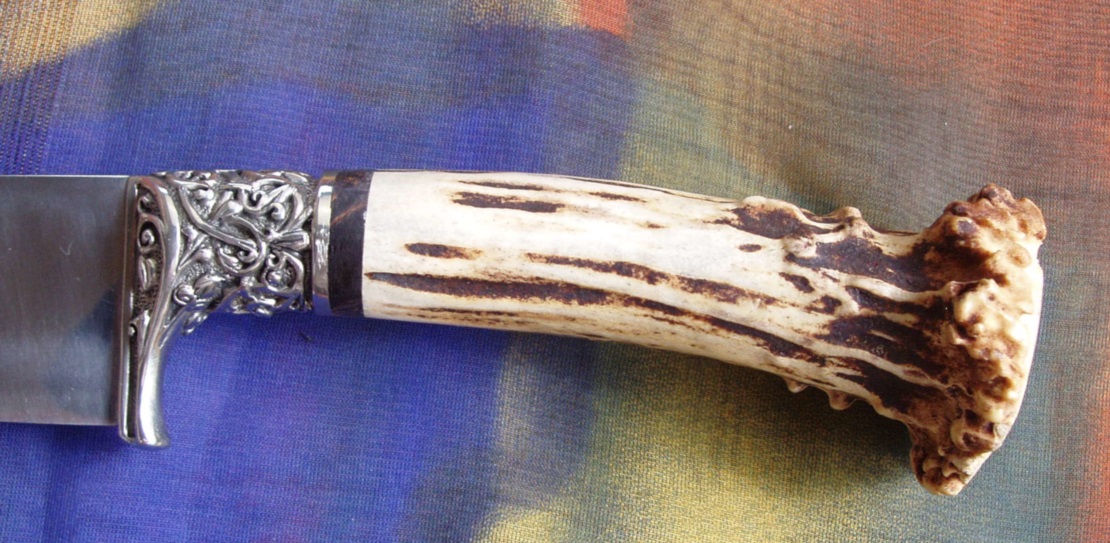
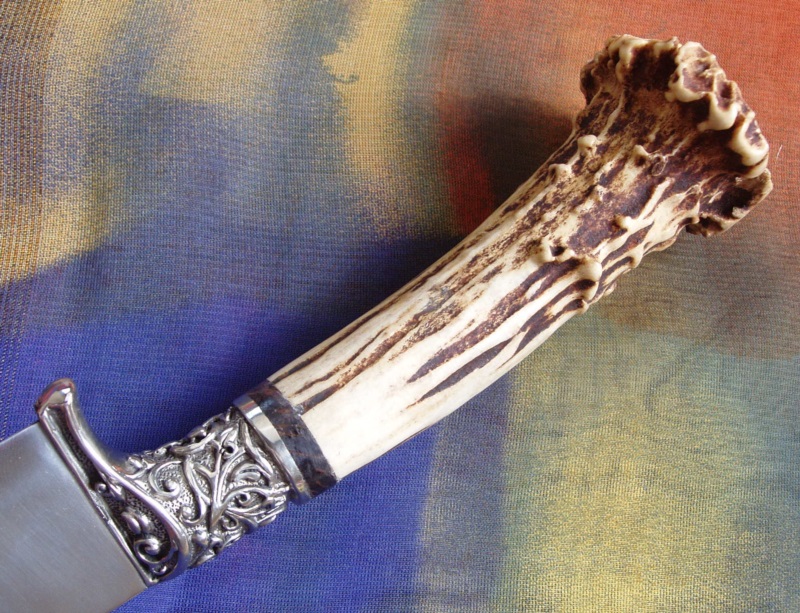
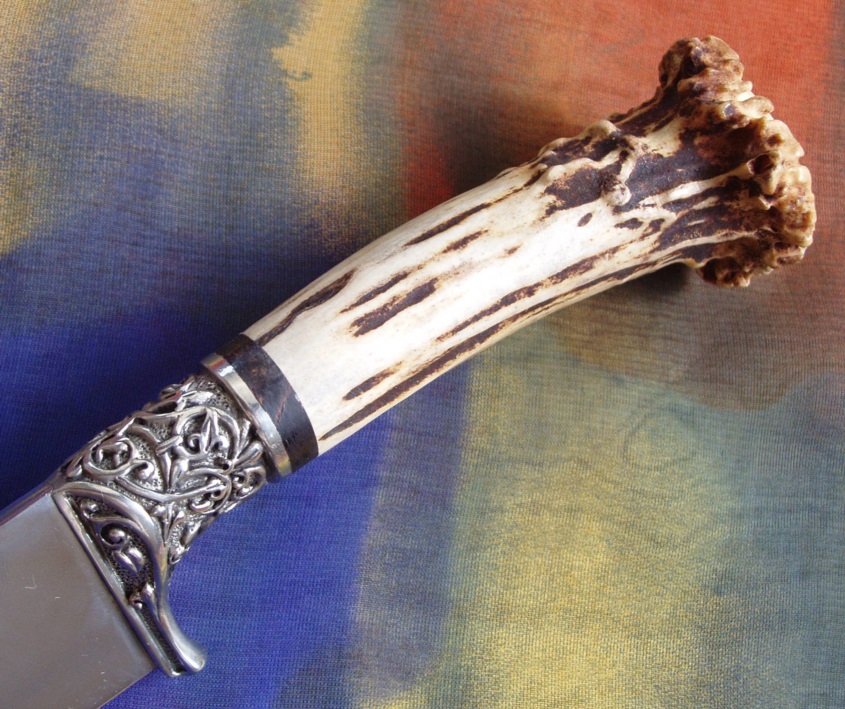
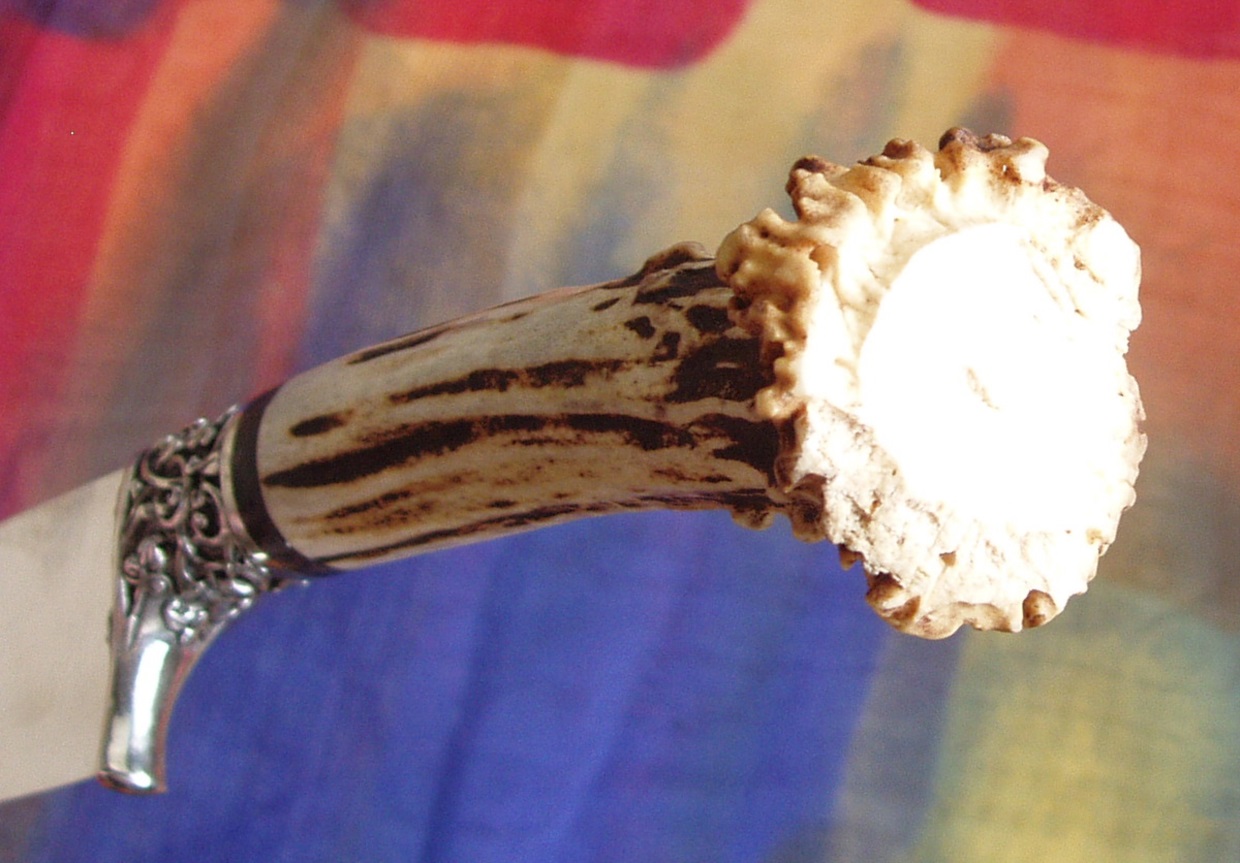
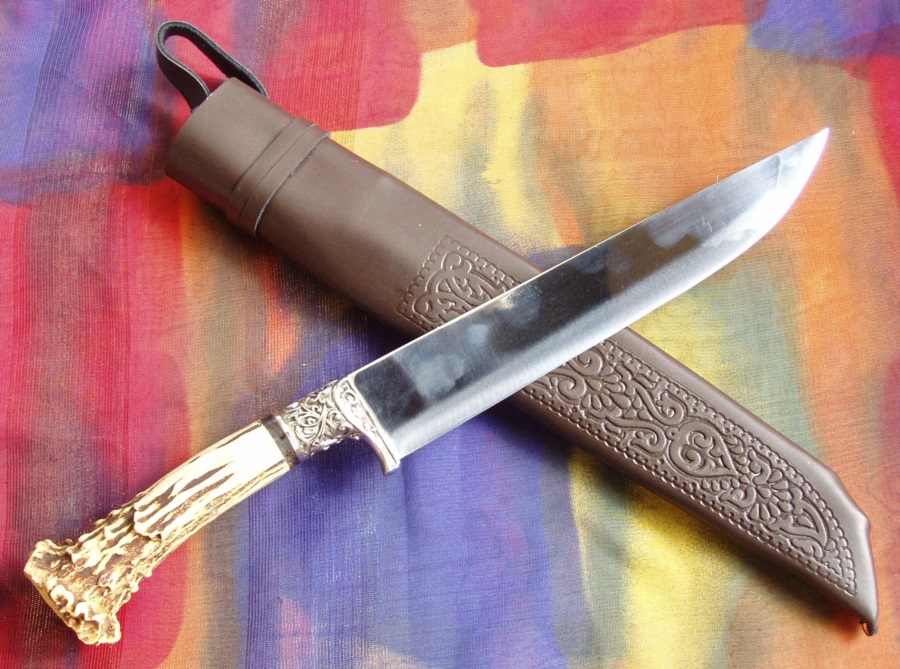
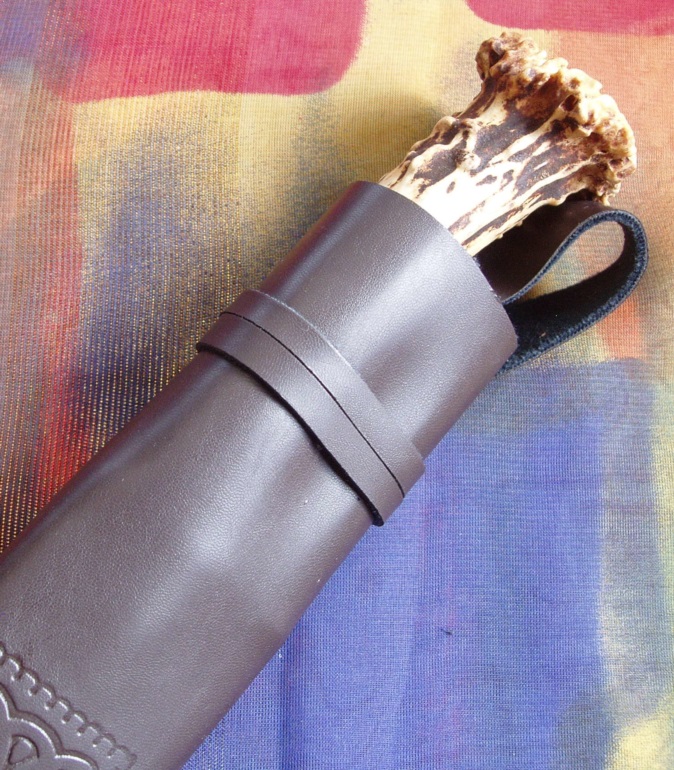
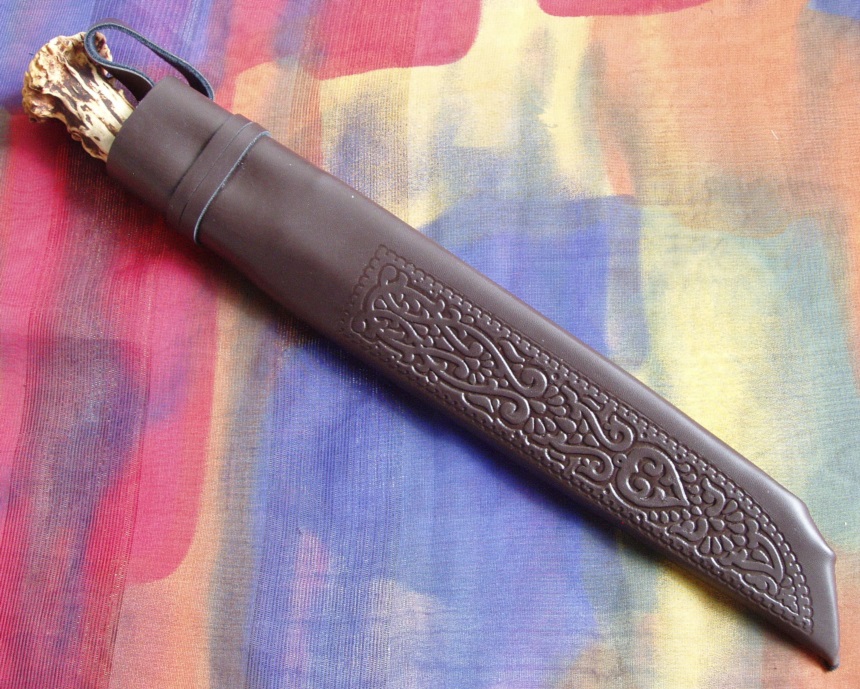
The pchak (from the Uzbek word pichoq – knife) is a traditional knife of the Uzbeks and Uyghurs, widespread with minor differences in details throughout Central Asia. Pchaks traditionally feature a single-edged blade with a full flat grind, set into a narrow handle with a round cross-section. A narrow tang extends from the blade at spine level. These are utility knives meant for kitchen work, although among the Uyghurs, the pchak was an attribute of manhood, meaning it must have also been used as a weapon.Pchaks were made from various materials; for the wealthy, they could feature high-quality steel with lavish decorations, though such specimens were rare. Bulat and Damascus steel were generally reserved for sabers, while mass-produced pchaks were made of carbon steels with low hardness. Today, many pchaks are made of stainless steel, primarily Russian 40X13 stainless steel hardened to 54-56 HRC. This particular pchak belongs to this stainless steel category and features a straight blade – the spine of the knife runs in a straight line from the handle to the tip, with a minimal drop. Pchaks of this type are called kords. The handle is made of roe deer horn – a mammal of the deer family widely found in Central Asia. The bolster is made of melchior (cupronickel). The sheath, featuring a shape traditional for knives from this region, is made of thin leather decorated with an embossed ornament.
Overall length: 344 mm
Blade length: 212 mm
Blade width (max): 36 mm
Blade thickness (max): 3.8 mm
Steel (according to Russian nomenclature): 40X13

 Briefly about pchaks (or pichaks, or pichoqs)