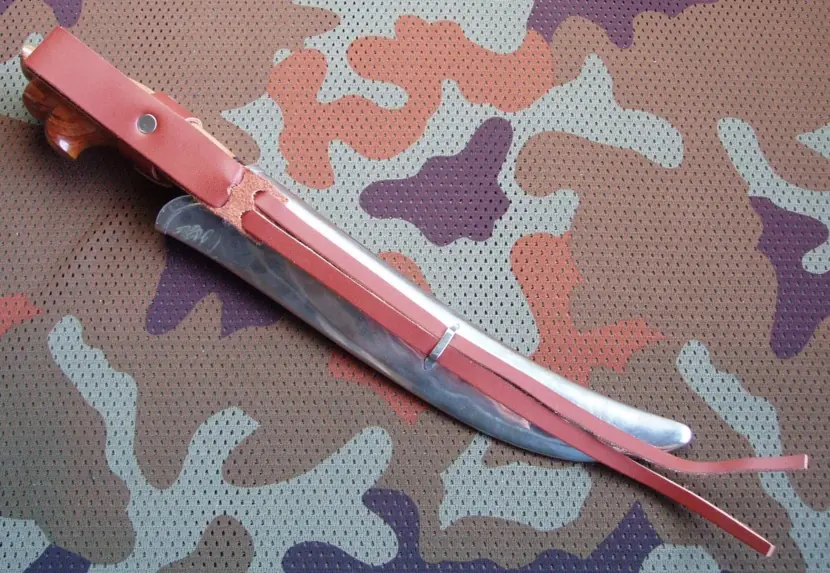
Pchak (from the Uzbek word Pichoq – knife) is a traditional knife of the Uzbeks and Uyghurs, widespread with slight variations in detail throughout Central Asia. Pchaks traditionally feature a single-edged blade with a full flat grind, set into a narrow handle with a round cross-section. A narrow tang extends from the blade at the spine level. These are utility knives meant for kitchen work, although among the Uyghurs, the pchak was a male attribute, so it must have also been used as a weapon. Pchaks were made from various materials; for the wealthy, they could feature high-quality steel with lavishly decorated elements, though such pieces were rare. Wootz and Damascus steel were mostly reserved for sabers, while mass-produced pchaks were made from carbon steels of lower hardness.
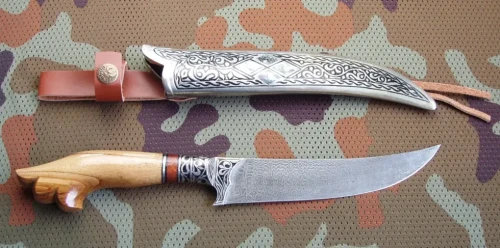
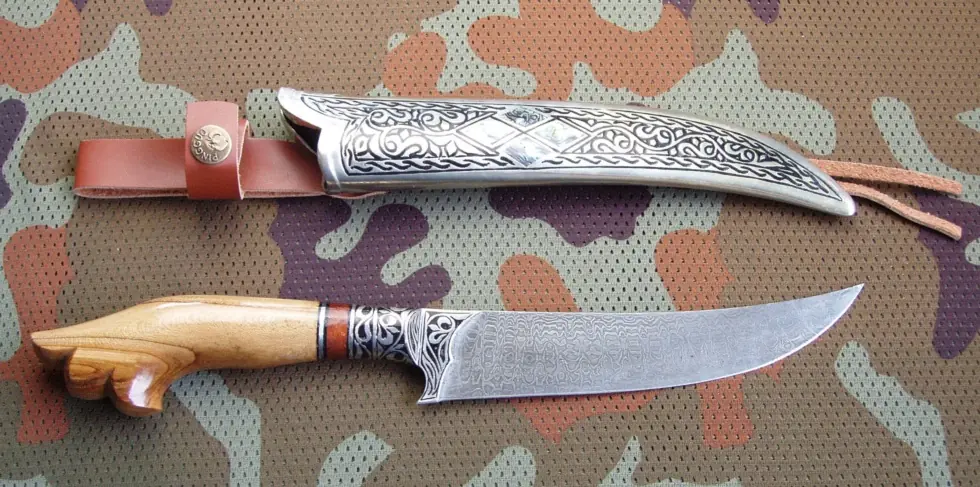
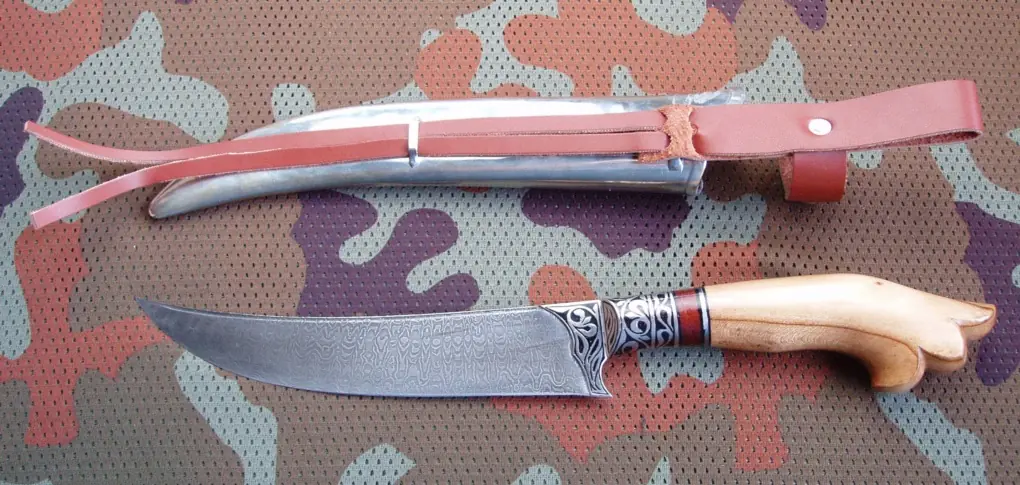
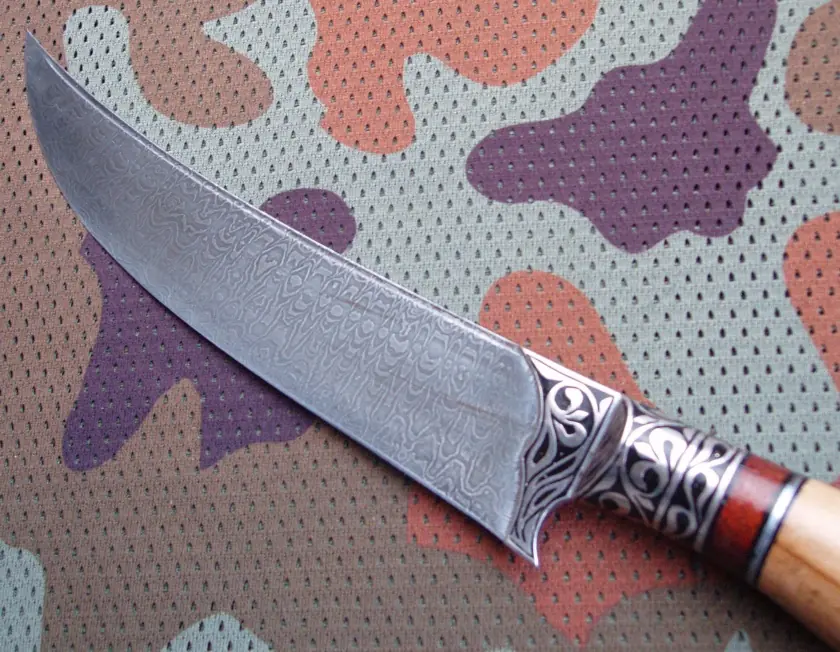
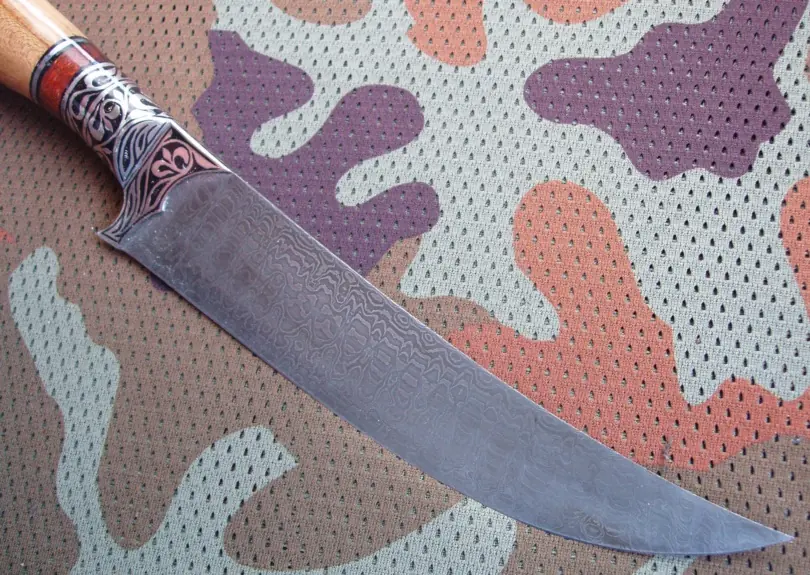
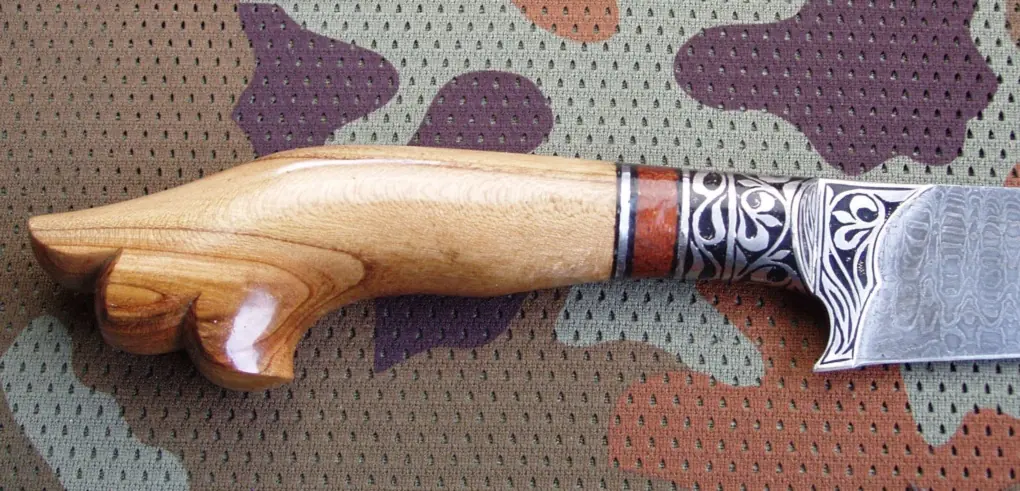
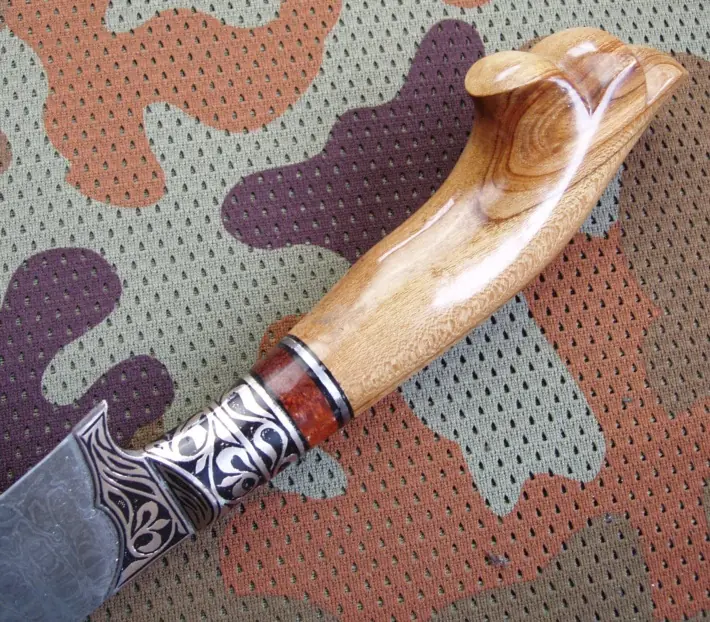
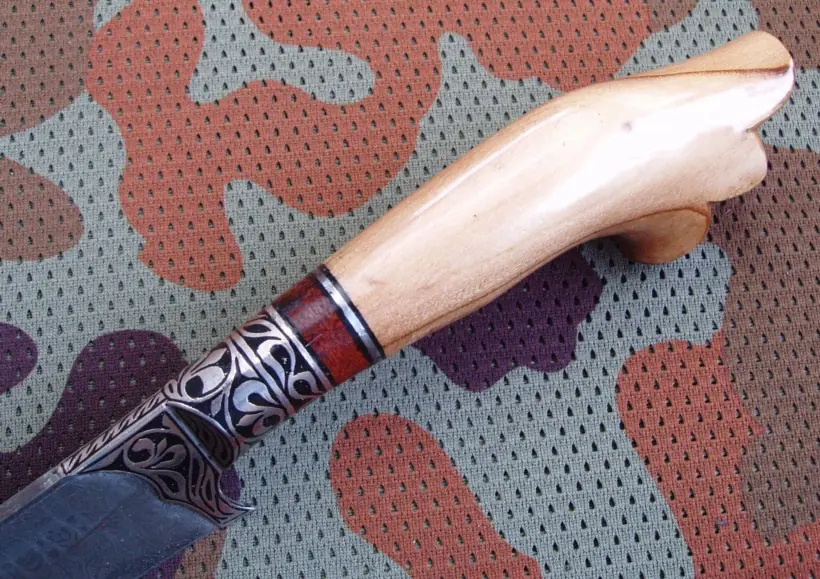
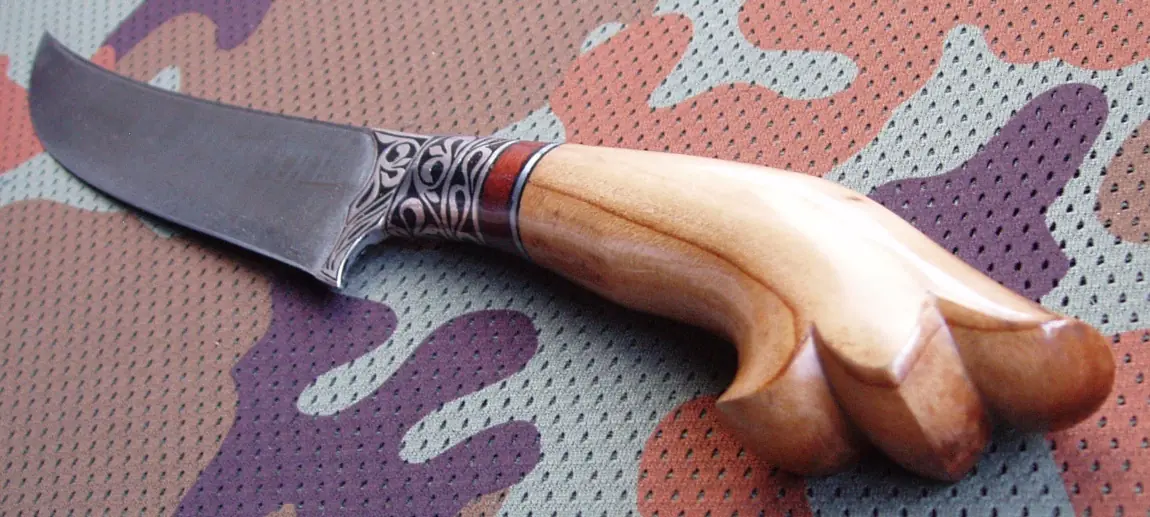
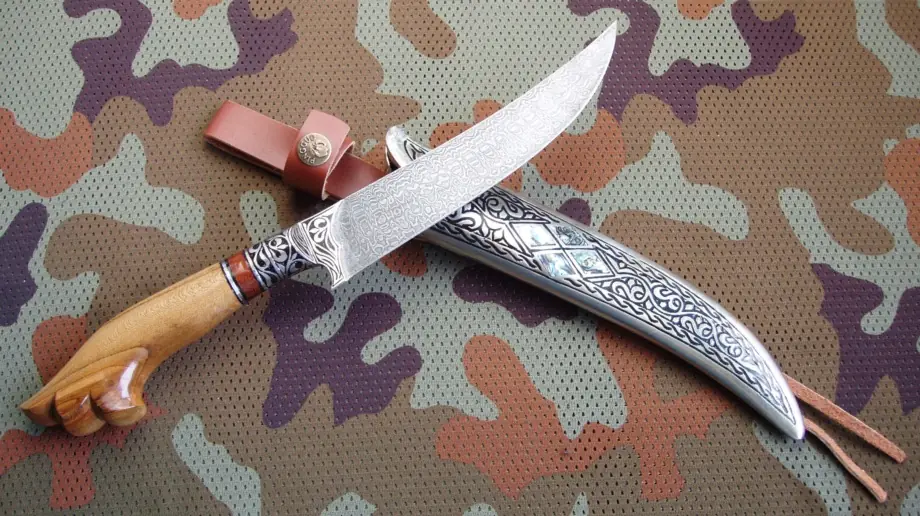
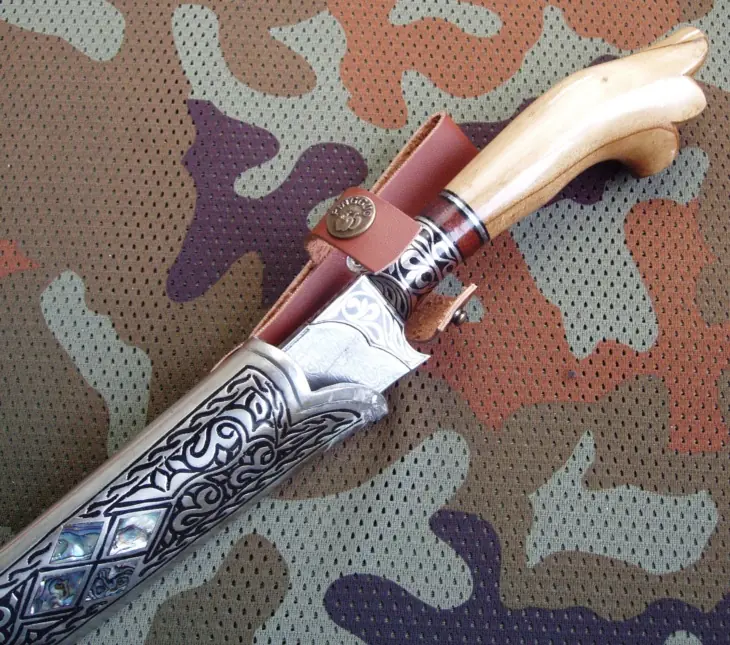
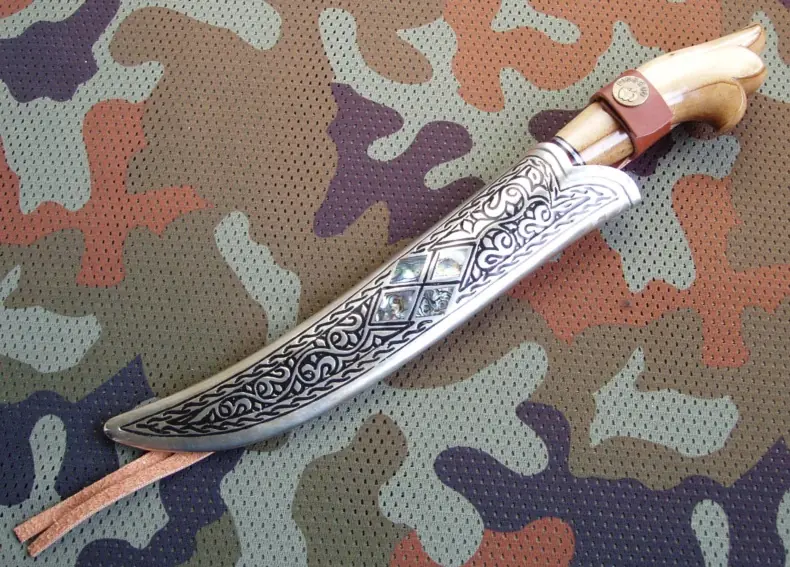
This particular Kayke-type pchak, where the tip of the knife is raised above the spine line, features a blade made of Uzbek pattern-welded Damascus steel. The Damascus pattern is distinct and aesthetic, but its hardness does not match Russian Damascus steels (it is around 56-58 HRC, whereas in Russia, Damascus is hardened to 59-62 HRC). A very beautiful carved Sukma-type handle (meaning push-tang construction) made of oriental plane wood. A bolster made of melchior, typical for pchaks, featuring a black ornament. Metal sheath decorated with hand-engraved, black-tinted chasing (chikan work) and mother of pearl (sadaf) inserts.
Overall length: 315 mm
Blade length: 167 mmBlade width (max.): 34 mm
Blade thickness (max.): 4 mm
Metal sheath (melchior), hand chasing, sadaf

 Briefly about pchaks (or pichaks, or pichoqs)