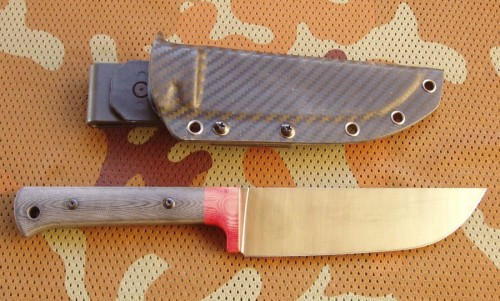
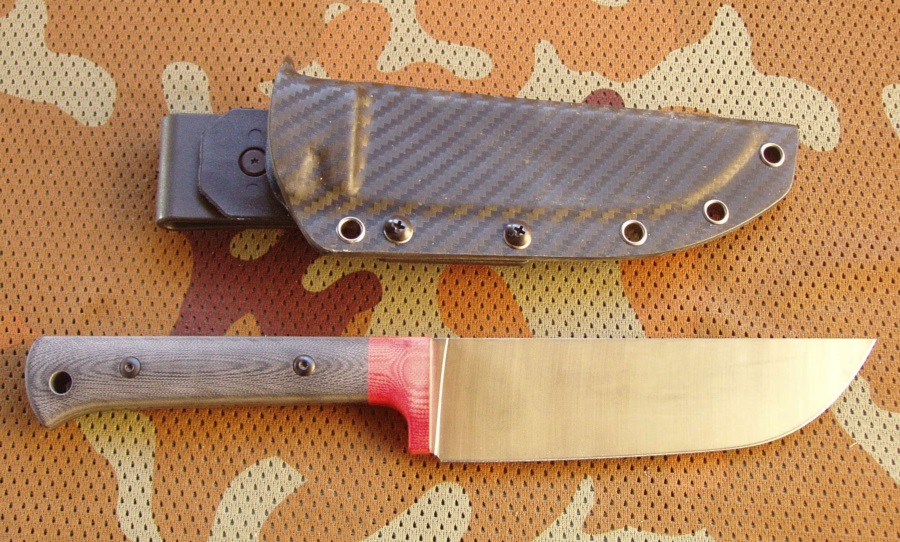
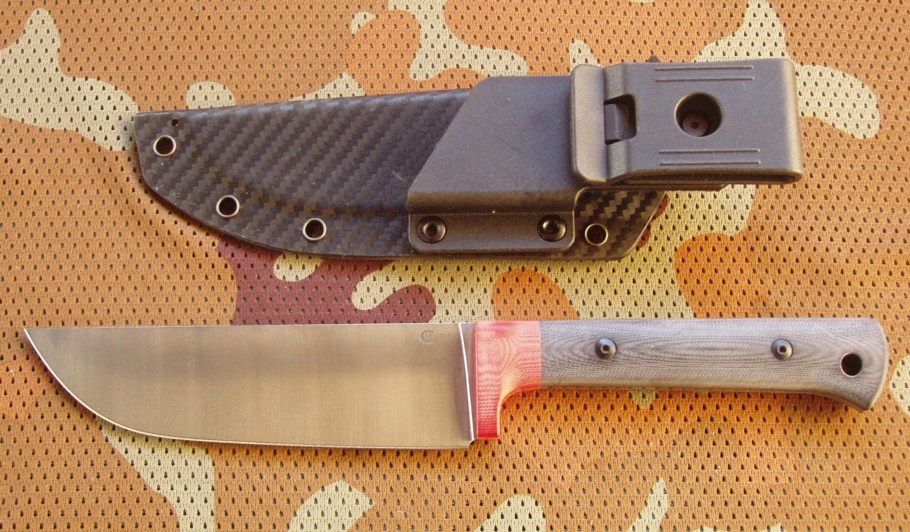
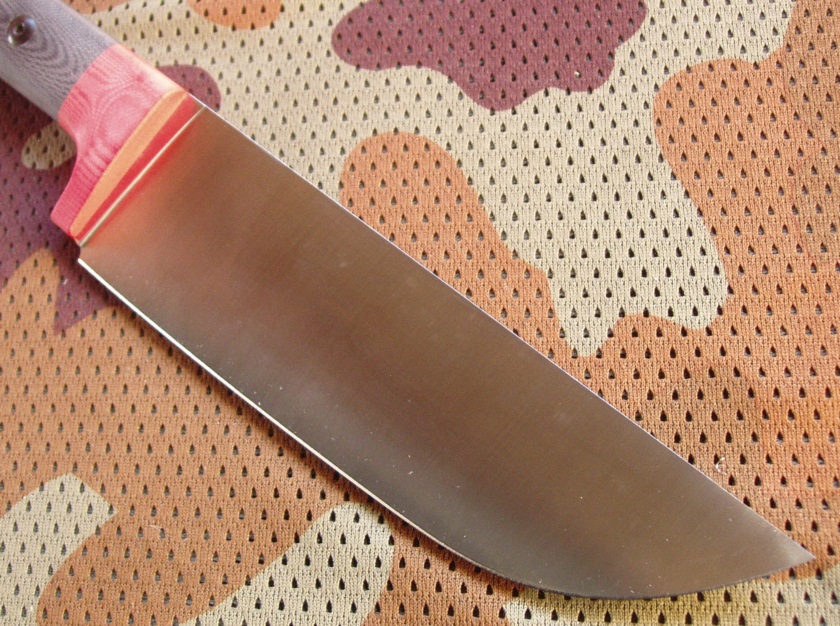
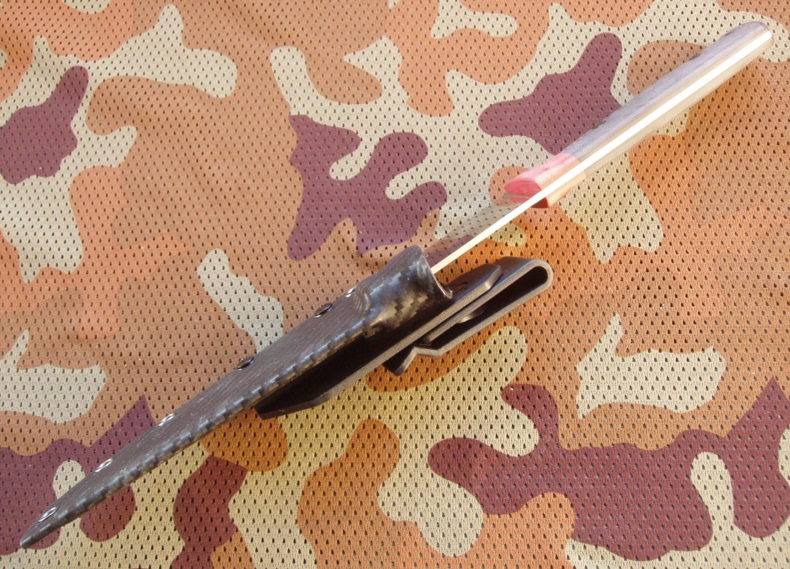
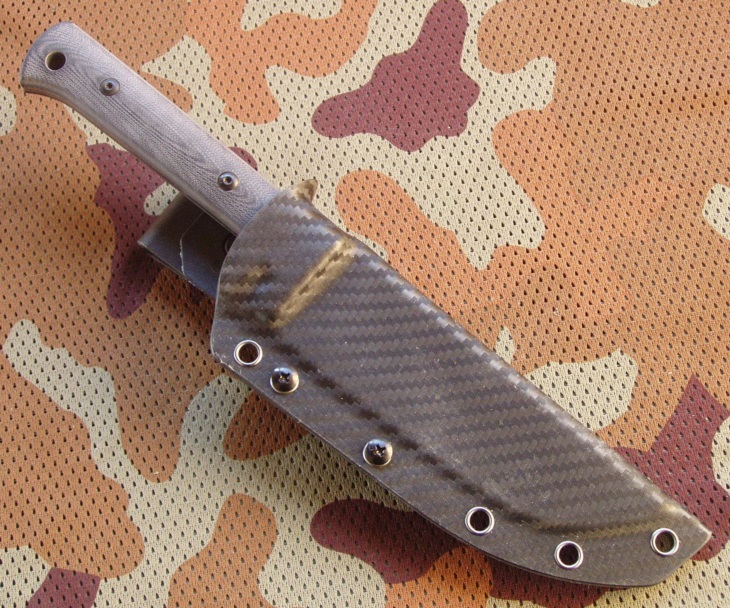
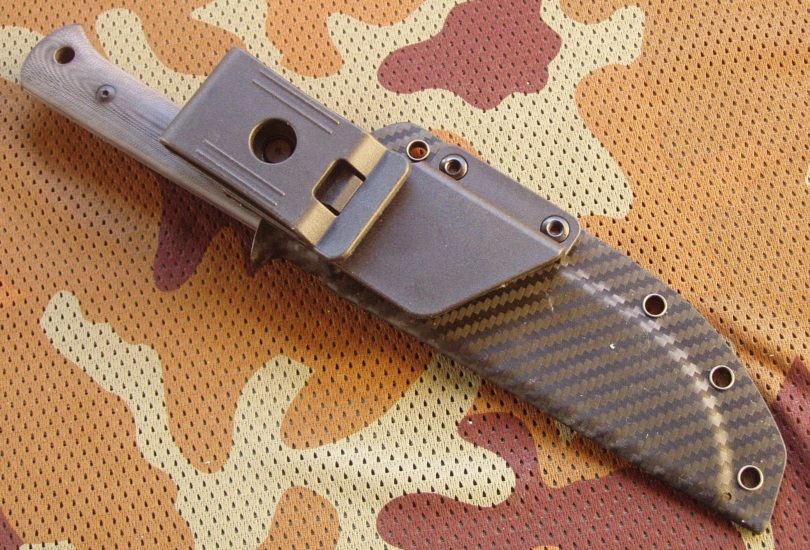
The Pchak (from the Uzbek word Pichoq – knife) is a traditional knife of the Uzbek and Uyghur peoples, common throughout Central Asia with minor variations in detail. Traditionally, Pchaks feature a single-edged blade with a full flat grind, set in a narrow, round-profile handle. The narrow tang extends from the blade, aligned with the spine. These are utility knives intended for kitchen tasks, although for the Uyghurs, the Pchak was a man's attribute and was therefore also used as a weapon. Pchaks were crafted from various materials. For the wealthy, they could be made from high-quality steel with ornate decorations, however, such pieces were rare. The use of high-quality Japanese VG-10 stainless steel in this model is an exceptionally fitting choice.
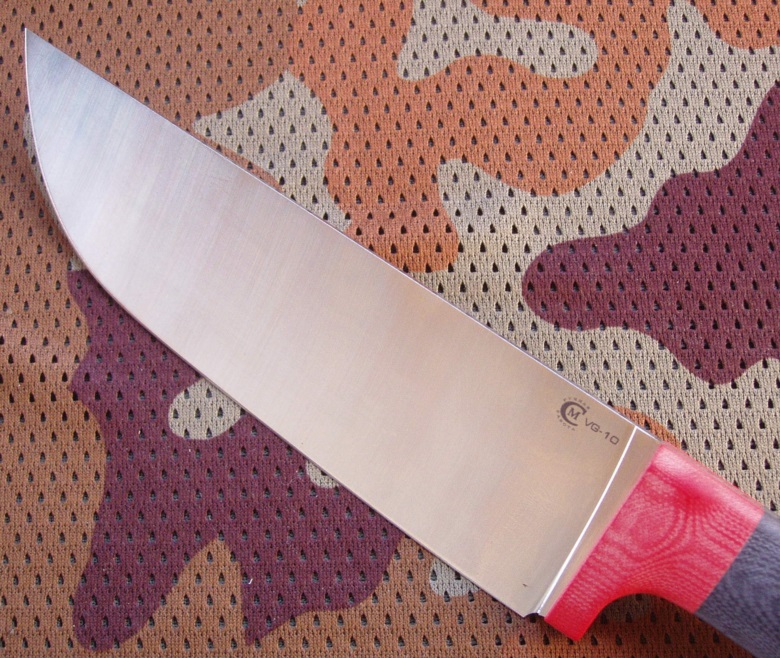
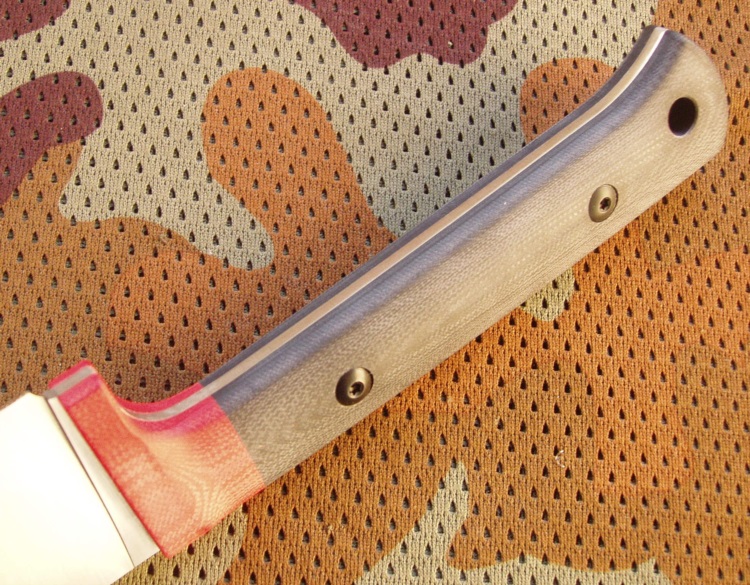
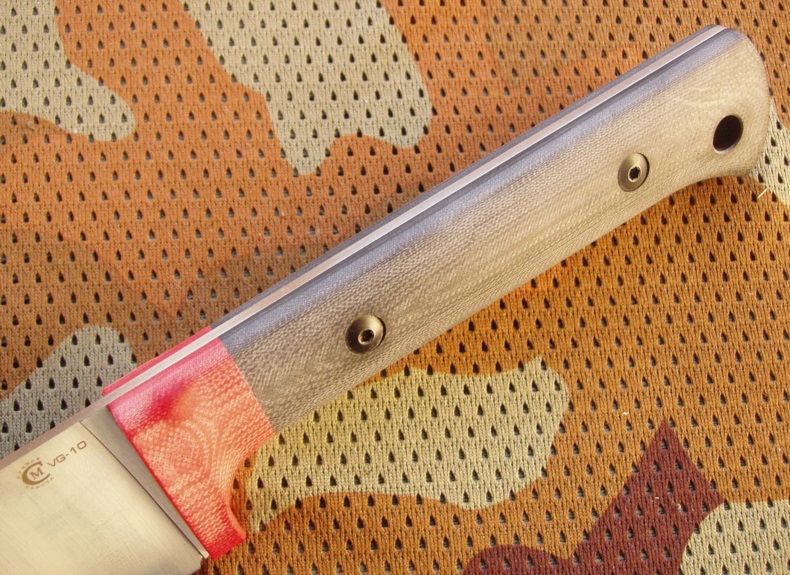
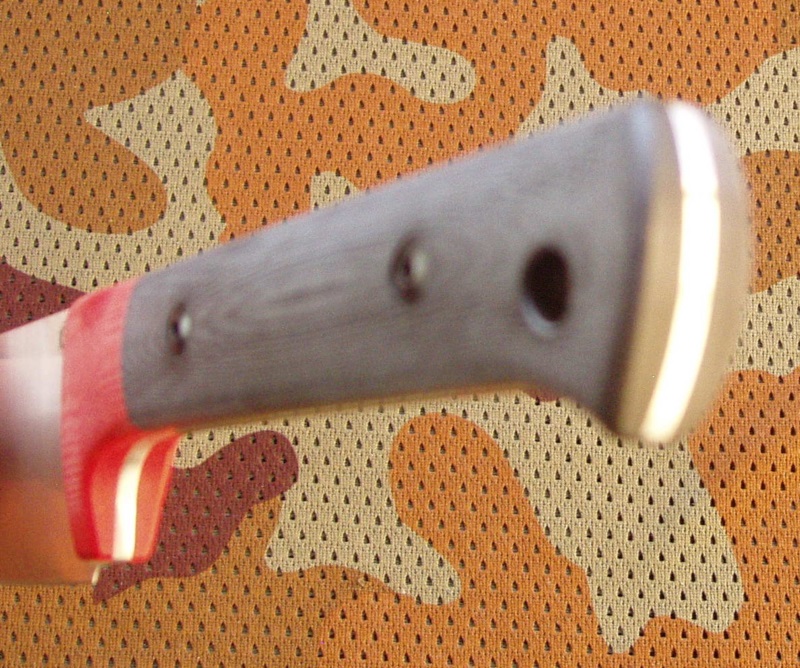
The blade has a straight spine, lacking the upswept tip commonly found on Pchaks where the point rises above the spine line. Hardness of 60 HRC (±1HRC) – a level rarely found in carbon steels, yet knives made from this steel are easy to sharpen. It has a full flat grind. The knife features a full tang construction with G-10 handle scales. The manufacturer's monogram and the inscription "Ручная работа VG-10" (Russian for "Handmade VG-10") are laser-engraved on the blade near the handle. The knife comes with a Kydex sheath.
Overall length: 275 mm
Blade length: 145 mm
Blade width: 40 mm
Blade thickness (max): 2.5 mm
Steel: VG-10
Sheath: Kydex.
Manufacturer: IP Siomina company

 Briefly about pchaks (or pichaks, or pichoqs)