

- Knife sharpening(22)
- Portable wood-fired tandoor ovens(4)
- Books(11)
- Holsters(23)
- Gloves(13)
- Items made from animal horn(6)
- Protective gear(8)
- Sheaths, mounting systems, lanyards(9)
- Tourism - camping - survival(20)
- Posters(11)
- Knives(1642)
- K110 steel(13)
- R12 steel(11)
- CPM S35VN steel(1)
- Bulat knives(36)
- 1095 steel(2)
- N690 steel(30)
- Х12МФ and D2 steel(206)
- Z90 steel(0)
- Pchak type knives(27)
- M398 steel(1)
- K340 steel(12)
- 95x18 steel(109)
- VG10 steel(17)
- M390 steel(3)
- NCV1 (80CrV2) steel(28)
- Push daggers(9)
- 65x13, AUS6, 420 steel(54)
- S390 steel(10)
- Yakut knives(8)
- Kitchen knives(7)
- Nessmuk knives(4)
- Skeleton and throwing knives(62)
- 65G steel(6)
- U8 steel(42)
- Z-160 steel(4)
- 50X14MF steel(13)
- Folding knives(250)
- Training knives(5)
- EI-107 and 100X13M steel(11)
- Peltonen knives (Peltonen finkas)(26)
- Vanadis 10 steel(6)
- Elmax steel(23)
- Nitro-V steel(0)
- AUS-8 steel(285)
- Neck knives(6)
- NKWD finka(15)
- Diving knives(3)
- Chinese stainless steels (7Cr17MoV, 8Cr13MoV, 5Cr15MoV)(69)
- PGK steel(16)
- WithArmour knives(6)
- XB5 steel(18)
- MV-58 steel(37)
- Niolox steel(5)
- 40X13 steel(4)
- Mosaic damascus, layered damascus, laminated blades(30)
- 1.4116 steel(13)
- Sleipner steel(8)
- Damascus type steel(328)
- AUS10, AUS10Co steel(30)
- 9XC steel(9)
- 14C28N steel(9)
- Machetes, shovels, axes, tomahawks(59)
- Blades for knifemakers(172)
- Materials for knife handles(145)
- Military, survival, camouflage clothing(91)
- Bagdes(40)
- Holsters, pouches, tactical vests(73)
- Hunter belts, bags, canteens(9)
- Dog tags(22)
- Others(54)
Uzbek Pchak 10 (damascus, stabilized wood, sadaf)



Description
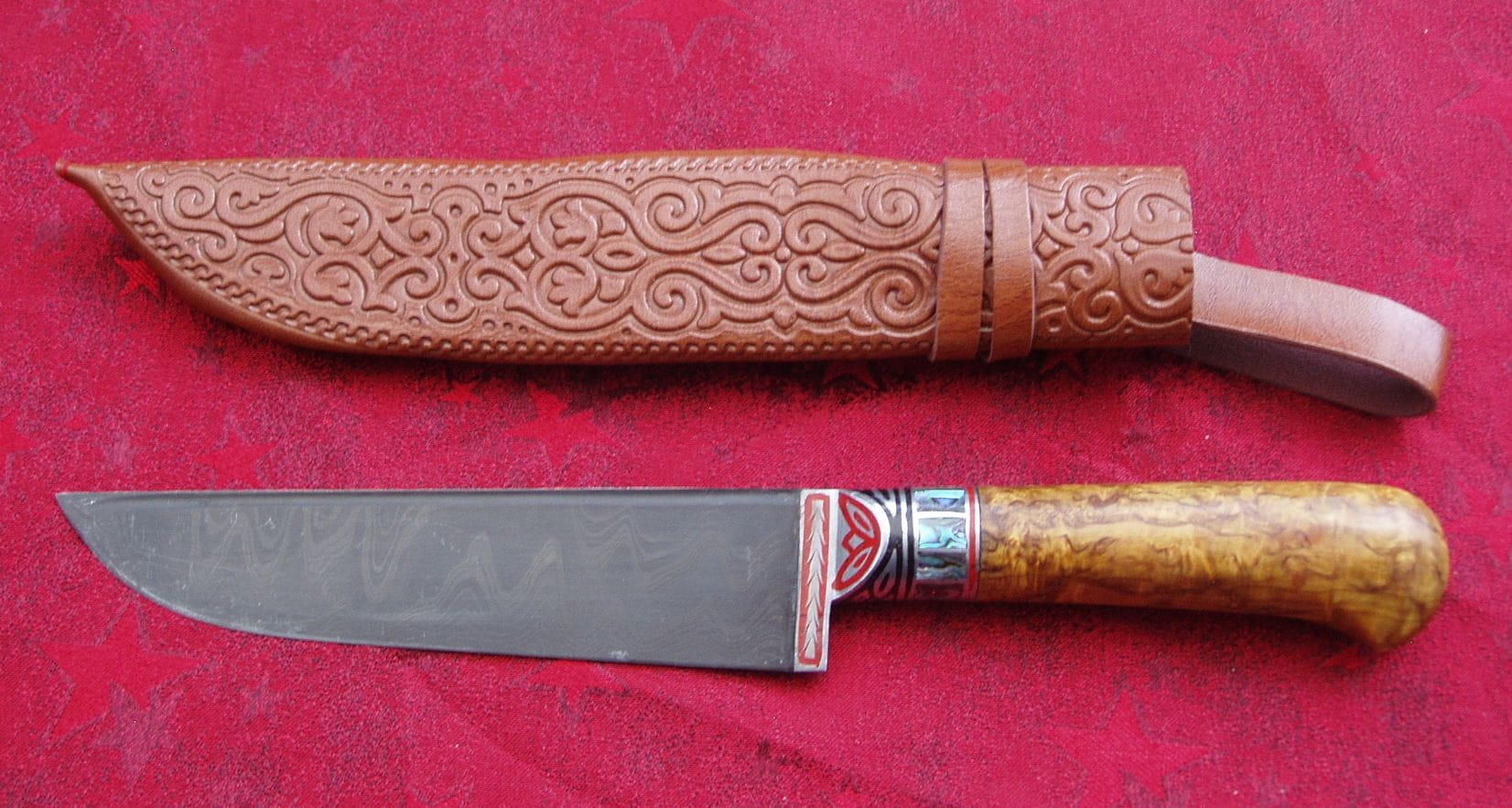
The Pchak (from the Uzbek word Pichoq – knife) is a traditional knife of the Uzbeks and Uyghurs, widespread with minor variations throughout Central Asia. Pchaks traditionally have a single-edged blade with a full flat grind set in a narrow, round-cross-section handle. A narrow tang extends from the blade at the spine level. These are utility knives, intended for kitchen work, although among the Uyghurs, the pchak was an attribute of a man, so it must have also been used as a weapon. Pchaks were made from various materials; for the wealthy, they could be of high-quality steel with rich decorations, but such examples were rare. Bulat and damascus steel were more likely used for sabers, while mass-produced pchaks were made from low-hardness carbon steels. Today, 90% of the Uzbek pchaks available in Russia are made from the widely available industrial tool steel ШХ15 (Polish equivalent LH15), but knives with a traditional Uzbek or Uyghur form but with blades ordered from Russia are also popular.
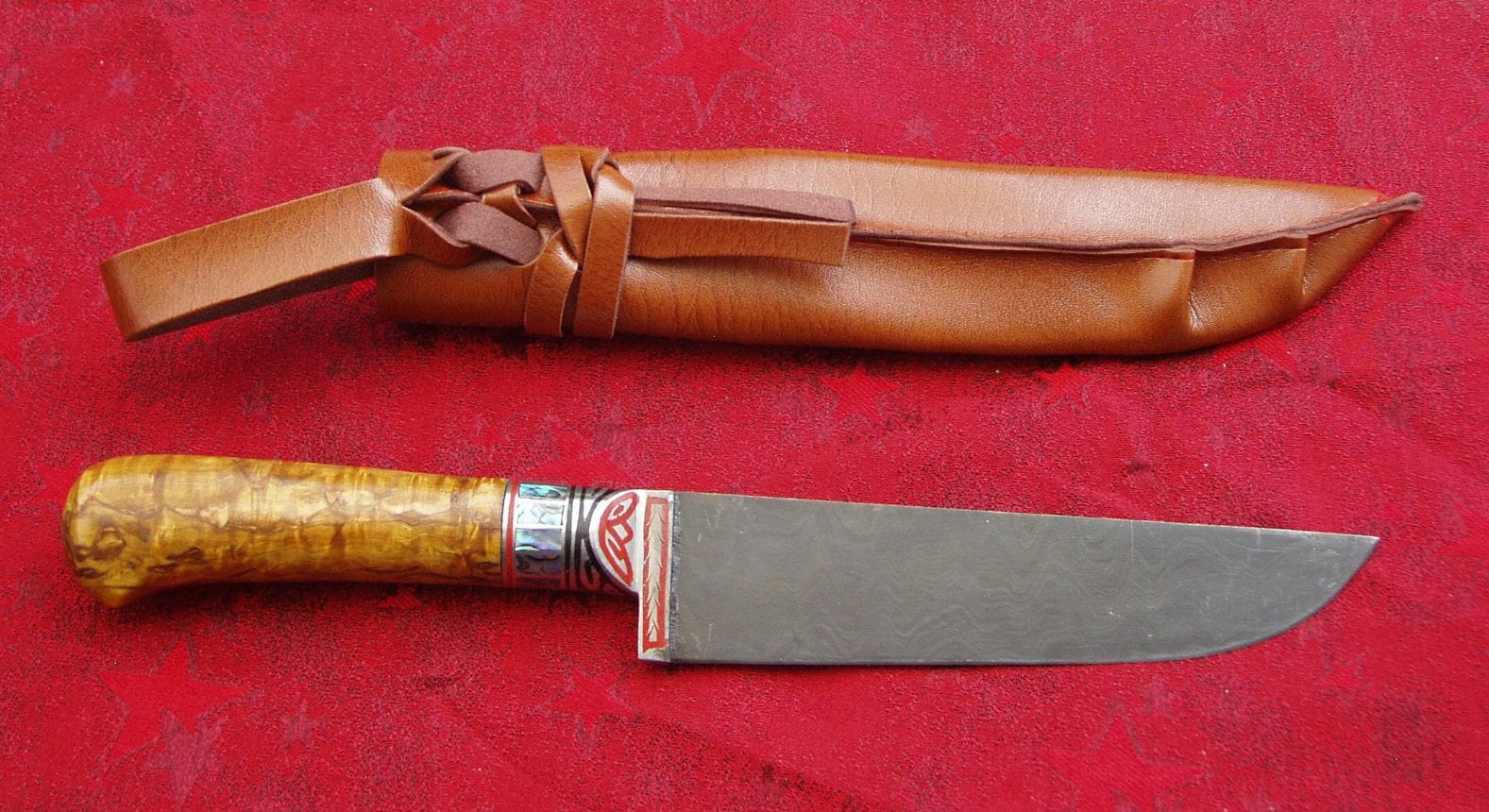
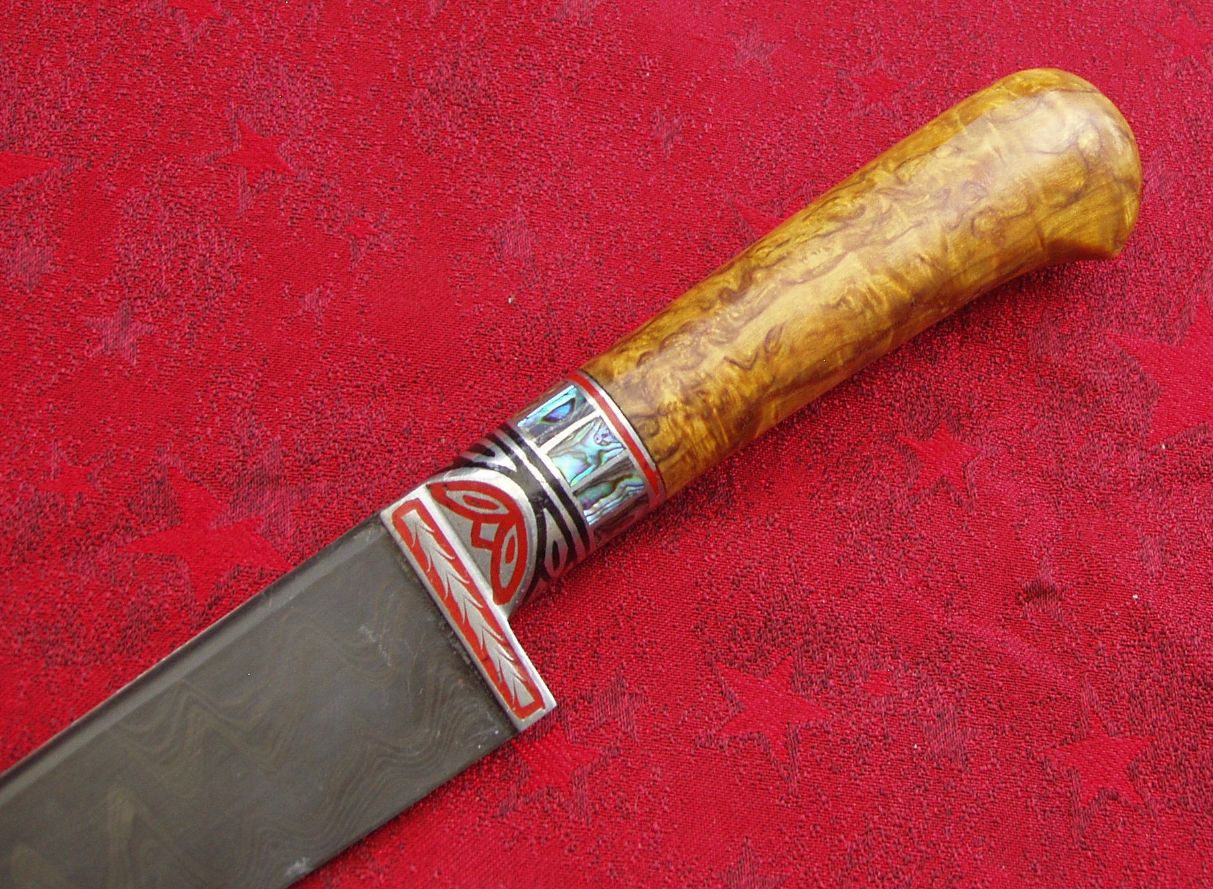
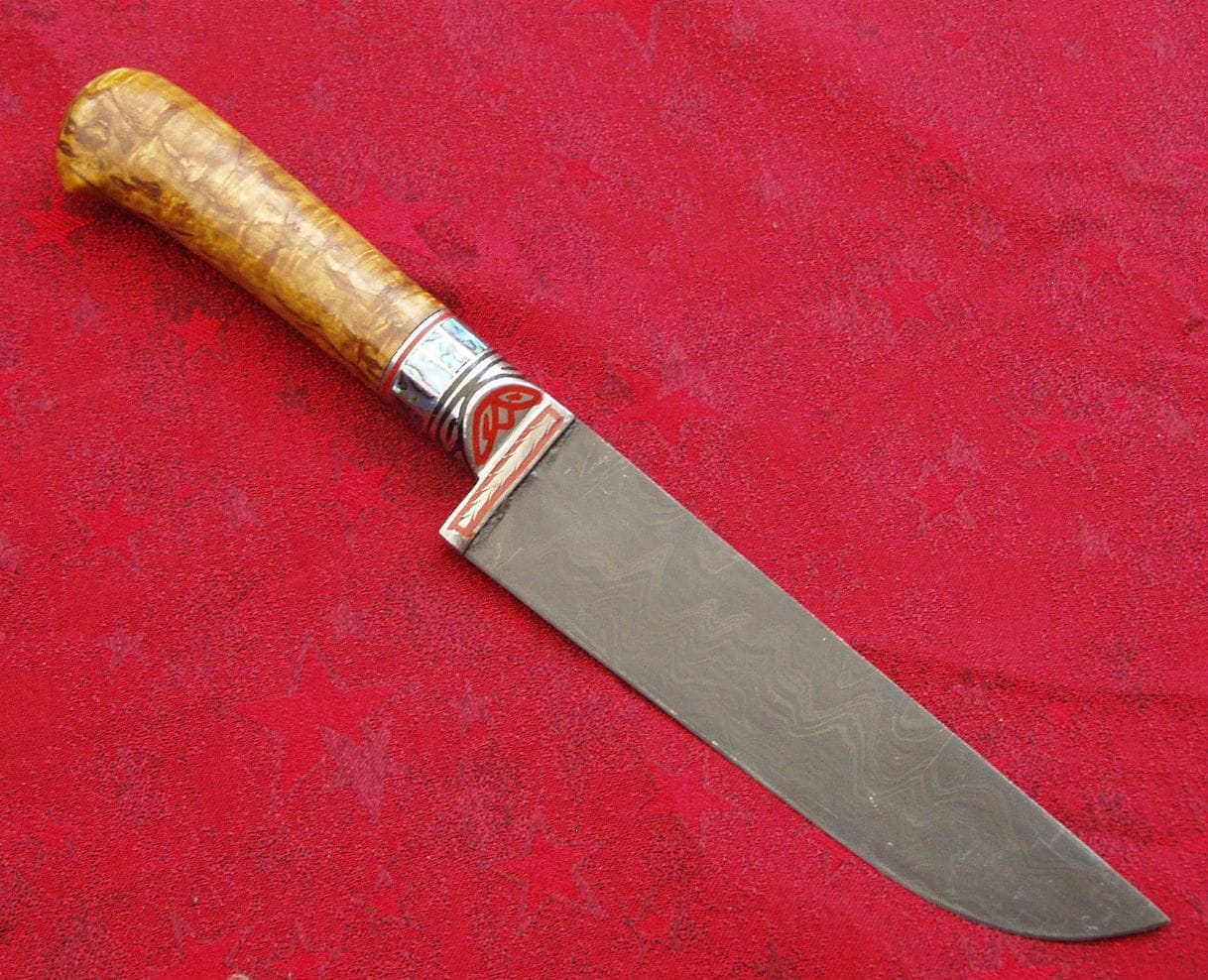
This particular pchak belongs to the type with a straight blade known as "kord" – the spine of the knife runs in a straight line from the handle to the tip, with a minimal drop. The blade is made of Damascus steel ordered from Russia with a hardness of 58-60 HRC (Uzbek damascus is hardened to a lower level, in the 40-45 HRC range). The handle is made of stabilized wood. The bolster and guard are typically Uzbek with traditional mother-of-pearl (sadaf) decoration. The sheath, with a traditional form for knives from this region, is made of artificial leather with a plastic insert and decorative embossing.
Overall length: 248 mm
Blade length: 132 mm
Blade width (max.): 31 mm
Blade thickness (max.): 3.1 mm